
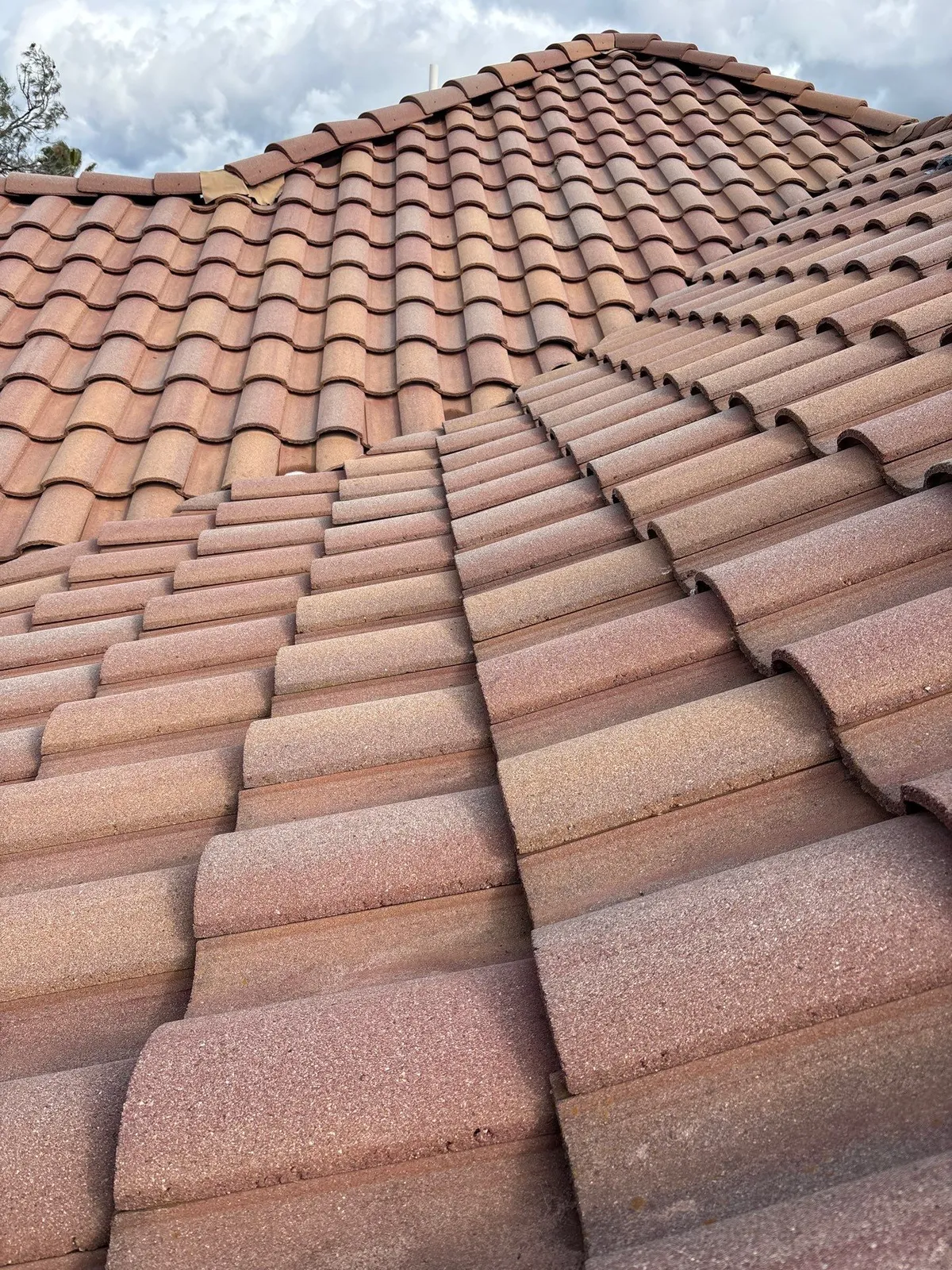
Tile roofs are everywhere in Chico. Drive through California Park or Canyon Oaks and you will see concrete and clay tile on house after house, much of it installed in the 1980s and 1990s.
Here is what most owners of those homes do not know: the tile is not what keeps the water out. The underlayment beneath it is. A tile roof can look perfect from the street and still leak, because the layer doing the real work has reached the end of its life.
This guide explains how tile roofs fail in the North Valley, what a tile repair involves, and how to tell whether you need a few replaced tiles or a full lift and relay.
How a tile roof actually works
Think of a tile roof as two roofs stacked together.
The top roof is the tile. It sheds most of the rain, blocks UV, and protects everything underneath from heat and fire. Concrete and clay tile can last 50 years or more in Chico. Heat and sun barely touch it.
The bottom roof is the underlayment, the felt or synthetic membrane nailed to the decking. It catches the water that gets past the tile, and some always does. Wind-driven rain, water that wicks under laps, and runoff in valleys all end up on the underlayment, which carries it down to the eave.
On many Chico homes built in the 1980s and 1990s, that underlayment was a standard felt. After 25 to 30 hot Valley summers under the tile, felt dries out, gets brittle, and cracks. Once it splits, water reaches the wood.
That is why most tile roofs that "fail" here have good tile sitting on dead felt. We touched on this in what 100-degree Chico summers do to your roof. This article goes deeper on the repair side.
The most common tile roof problems we see in Butte County
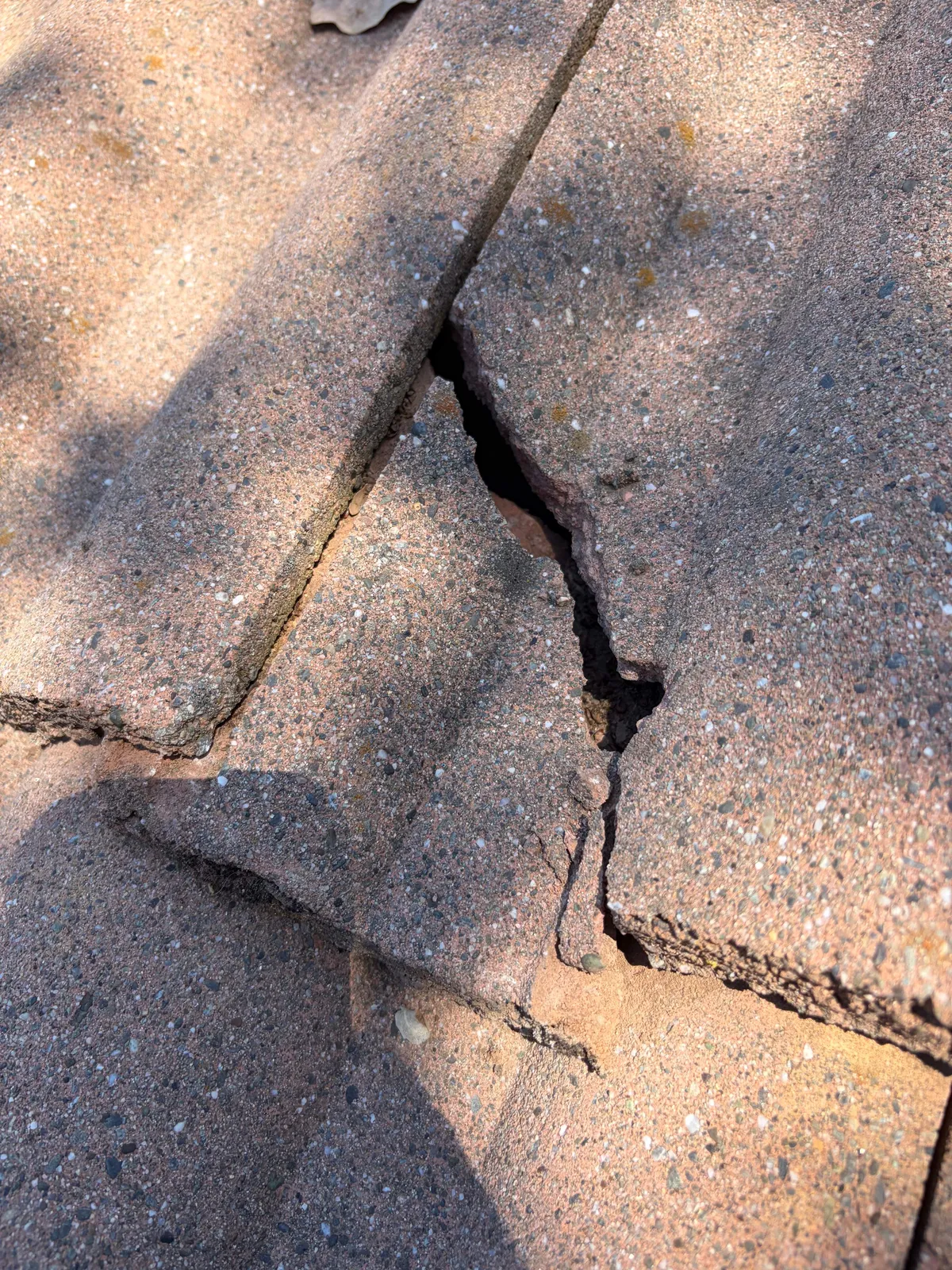
Cracked and broken tiles
Tile is tough against weather and brittle against impact. The usual causes:
- Foot traffic. Satellite installers, solar crews, painters, and holiday-light hangers who step in the wrong spot. Tile has to be walked on in specific places, and most trades do not know where.
- Falling limbs. Valley oaks, sycamores, and pines drop branches every winter. See trees and your roof.
- Age. Some older concrete tile gets softer and more porous over decades.
A single cracked tile is not an emergency on its own. It becomes one when the underlayment below it is already worn.
Slipped and displaced tiles
Tiles are fastened with nails, wire, clips, or foam adhesive, depending on when and how the roof was installed. Fasteners rust and adhesives fail. When the north wind comes through, loose tiles shift and slide out of line, leaving gaps that expose the underlayment to direct sun and rain. Our article on north wind roof damage covers what that wind does to tile.
Failed underlayment
This is the big one, and you cannot see it from the ground. Signs include:
- Water stains on ceilings, often far from any visible damage
- Leaks that only show up in long, heavy storms
- Dark or rotted wood at the eaves or under the roof edge
- Brittle, crumbling felt visible where a tile is lifted
Valley and flashing failures
Valleys on tile roofs collect leaves and needles, which dam water and push it sideways under the tile. Metal valley flashing can rust through on older roofs. Flashings at walls, chimneys, and skylights are frequent leak points too, the same as on a shingle roof.
Mortar and ridge problems
Ridge and hip tiles on many older roofs are set in mortar. Mortar cracks and breaks away over time, letting water and pests in at the top of the roof. Newer systems often use a ventilated ridge with mechanical fasteners instead.
Three levels of tile roof repair
1. Spot repair
For a handful of cracked or slipped tiles over sound underlayment, we replace or reset the tiles, secure them properly, and check the area around them. This is the fastest and least expensive fix.
Finding matching tile is part of the job. Many profiles and colors from the 1980s and 1990s have been discontinued. We match as closely as possible, and on some jobs we pull sound tiles from a less visible slope to patch a front-facing area.
2. Section repair
When a leak traces back to failed underlayment in one area, like a valley or around a chimney, we remove the tile in that section, replace the underlayment and flashing, and reinstall the tile. This stops the leak without redoing the whole roof.
3. Lift and relay
When the underlayment is failing across the roof, the right answer is usually a lift and relay. We carefully remove and stack the tile, inspect and repair the decking, install new underlayment and flashings, then put the tile back. Broken tiles get replaced along the way.
You keep the tile, which still has decades left, and get a new waterproof layer under it. On most homes, a lift and relay costs less than a full replacement with new tile and keeps the look of the house exactly the same.
It also gives us the chance to bring the details up to current standards, such as modern synthetic underlayment, new valley metal, and ember-resistant vents if your home is in a fire hazard zone. See wildfire-ready roofing in Butte County.
When replacing the tile makes more sense
A lift and relay is not always the right call. A full replacement can make more sense when:
- The tile itself is soft, crumbling, or breaking at a high rate when handled
- Many tiles are broken and no match is available
- The framing cannot carry tile weight after repairs
- You want to switch materials, often to architectural shingles or metal for a lighter roof
If you are weighing those options, our comparison of metal roofs vs. shingles and our guide to roof repair vs. replacement will help.
Tile roofs and the cool roof rule
California's energy code now requires a cool-rated roof on most steep-slope residential reroofs in Climate Zone 11, which includes Chico, when more than half the roof is replaced. Heavy roofs of 25 pounds per square foot or more, which includes most tile, generally fall under an exception. We confirm what applies to your project and handle the permit with the City of Chico or Butte County.
Can you walk on a tile roof?
You can, but you should not. Concrete and clay tile break under a misplaced foot, especially near the unsupported edges. Roofers step on the lower third of each tile, where it rests on the tile below, and use foam pads or walk boards on fragile roofs.
If anyone needs to be on your roof, from a solar installer to a chimney sweep, ask how they plan to walk it. If you are adding solar, read solar panels and your roof first. Tile around solar mounts is a common source of new leaks.
Keep your tile roof lasting
- Keep valleys and gutters clear of leaves and needles, especially before the first fall storm.
- Trim back overhanging limbs.
- Replace cracked tiles soon, before winter rain gets to the underlayment.
- Have the roof inspected once it passes 20 years, even if it looks fine from the street.
We repair and relay concrete and clay tile roofs across Chico, Paradise, Oroville, Durham, and the rest of Butte County. Learn more about our roof repair services, or request a free estimate and we will tell you exactly what your tile roof needs.
Frequently Asked Questions
Why is my tile roof leaking if none of the tiles are broken?
The tile is not the waterproof layer. The underlayment beneath it is. On many Chico homes from the 1980s and 1990s, that underlayment has dried out and cracked after decades of summer heat, so water reaches the decking even when the tile looks perfect.
How long does a tile roof last in Chico?
Concrete and clay tile often last 50 years or more here. The underlayment beneath typically lasts 25 to 30 years. Most tile roofs need a lift and relay to replace the underlayment long before the tile itself wears out.
What is a tile roof lift and relay?
A lift and relay removes the existing tile, replaces the worn underlayment and flashings, repairs any damaged decking, and reinstalls the original tile. Broken tiles are replaced. You keep the look of your home and get a new waterproof layer underneath.
Can you replace just one cracked roof tile?
Yes. If the underlayment below is sound, a cracked tile can be replaced on its own. Matching older tile can take some searching, and sometimes tiles are borrowed from a less visible part of the roof.
Is it better to repair a tile roof or replace it with shingles?
If the tile is sound, a lift and relay usually keeps the longest-lasting part of your roof and costs less than new tile. Switching to shingles or metal makes sense when the tile is failing, matches are unavailable, or you want a lighter roof.