
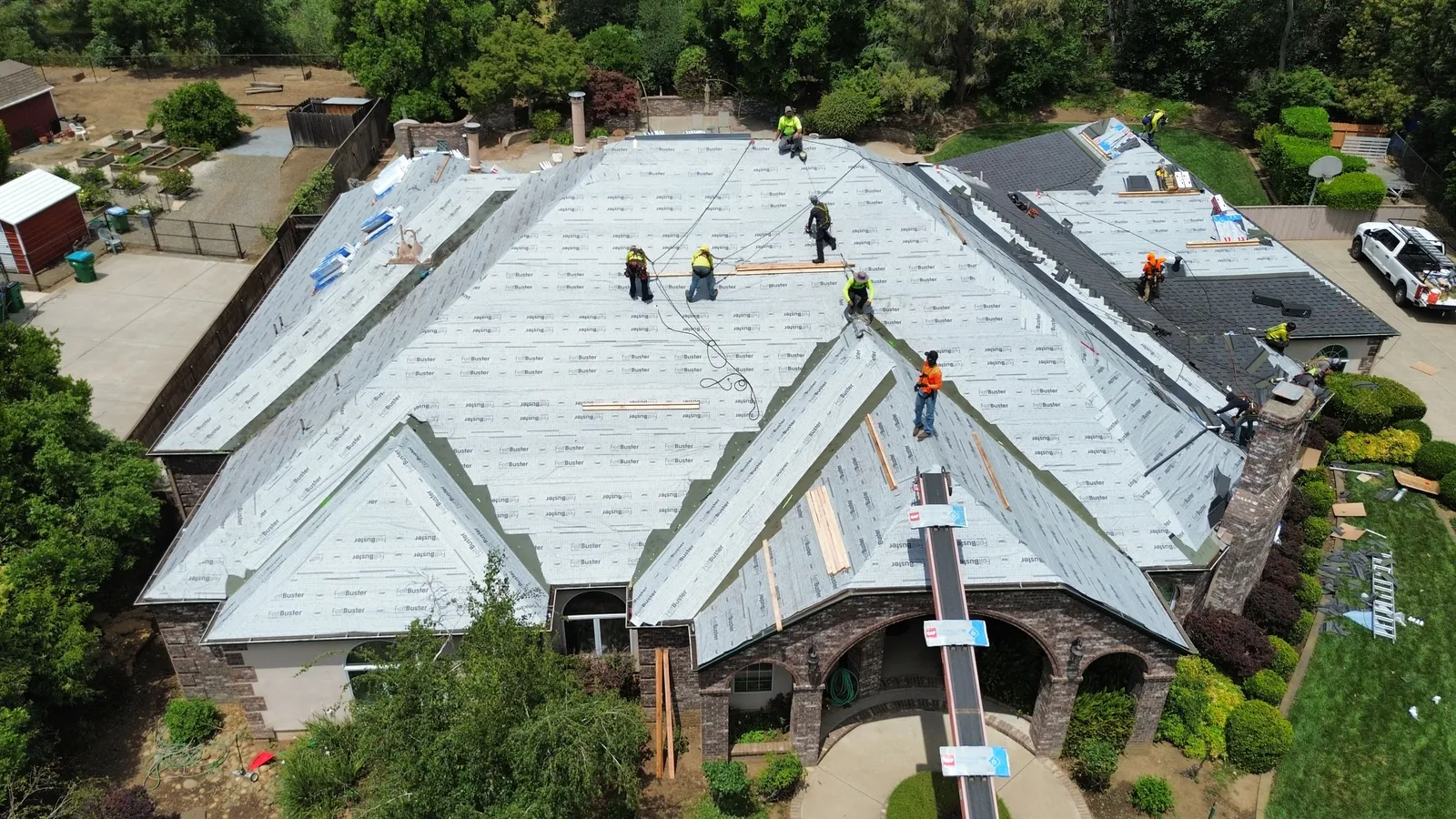
Chico earned the nickname City of Trees honestly. Bidwell Park runs 3,670 acres from downtown into the foothills, and the tree canopy spills out of it into almost every neighborhood.
Valley oaks. Western sycamores. Black walnuts in the Avenues. Redwoods that somebody planted in a front yard in 1965 and never expected to get that big. Gray pine and ponderosa once you climb toward Forest Ranch and Paradise.
We love the trees. We also spend a lot of time on roofs underneath them.
This is a practical guide to what Chico's trees do to a roof, which ones cause the most trouble, and how to keep your shade without losing your roof.
What trees actually do to a roof
Trees hurt roofs in four ways. None of them are dramatic. All of them add up.
Debris. Leaves, needles, seed pods, and twigs collect in valleys, behind chimneys, and in gutters. Wet debris holds moisture against the roof surface and blocks drainage. That is the number one cause of the leaks we fix on tree-covered homes.
Shade. A roof that stays damp under a canopy grows moss and algae. Moss holds water like a sponge and lifts shingle edges as it grows. On the north side of homes near the creeks, we see moss on 8-year-old roofs.
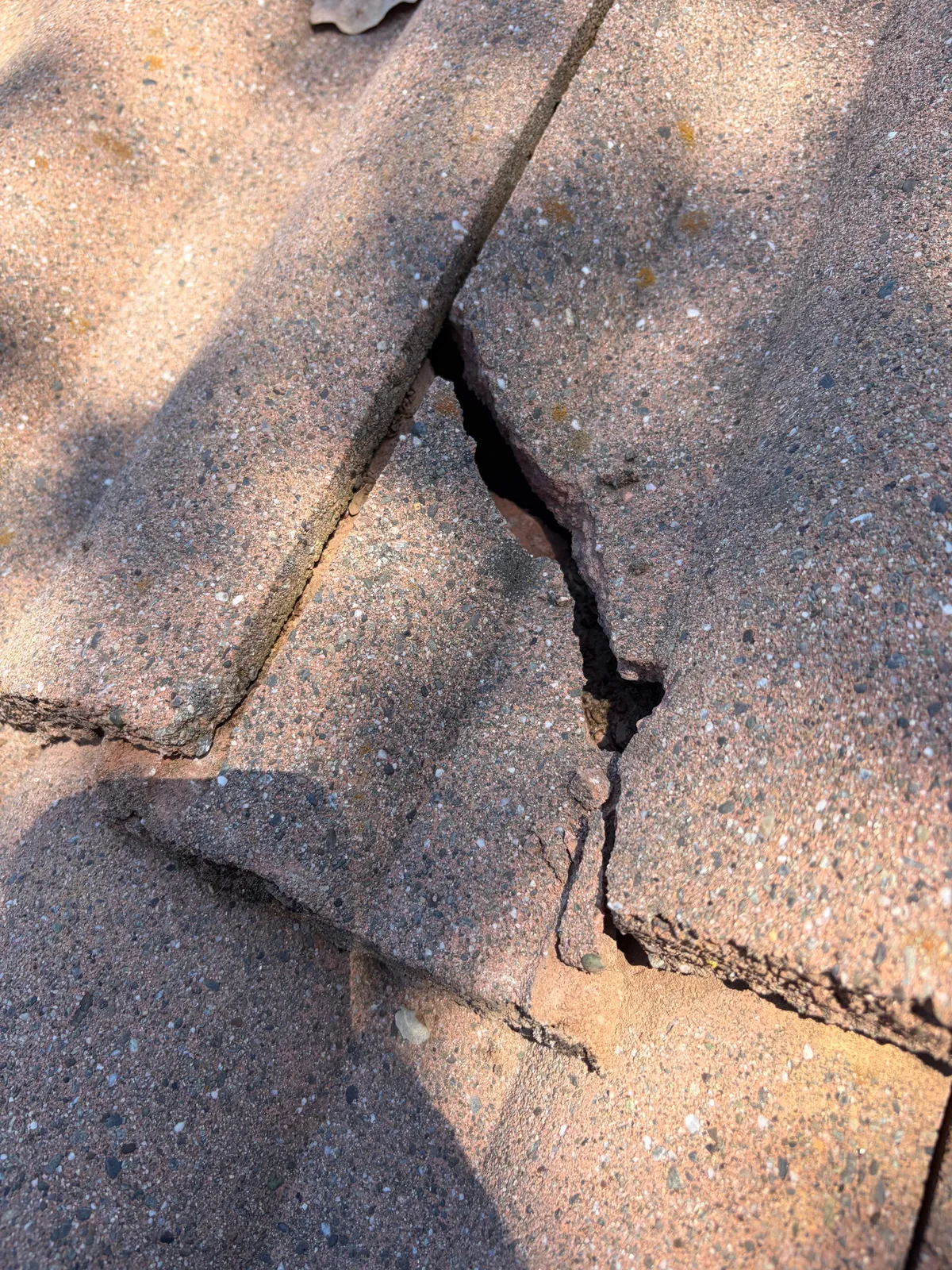
Contact. A branch that rests on or brushes the roof will wear through the surface over time. On a windy day it acts like sandpaper. On tile, it cracks tiles.
Impact. Limbs come down. In a north wind event, big ones come down. A falling oak limb can punch through decking.
The trees we see most, and what each one does
Valley oak. The signature tree of the Sacramento Valley and the reason the Avenues look the way they do. Valley oaks drop leaves late, sometimes into December, and drop acorns and small limbs all year. They are protected in Chico, so you cannot just take one out. Plan for cleaning the valleys twice each fall.
Western sycamore. Common along Big Chico Creek and Lindo Channel. Sycamores drop huge leaves and shed bark. The leaves mat together and block gutters fast.
Black walnut and English walnut. All over older Chico and out toward Durham. They drop nuts and husks that stain roofing and clog downspouts. The husks are heavy enough to dent thin metal roofing.
Redwood, cedar, and Italian cypress. Planted everywhere as screens and ornamentals. Fine needles that work under tile, pack into gutter guards, and are nearly impossible to get out of a flat roof drain.
Gray pine and ponderosa pine. The foothill trees. Long needles that pile up in valleys and along parapets, and that burn. On a home in Forest Ranch, Cohasset, Paradise, or Magalia, pine needle buildup is a wildfire issue, not just a drainage issue. See our article on wildfire-ready roofing.
Almond and walnut orchards. If you are on the edge of town near Durham, Dayton, or out toward Hamilton City, orchard dust and debris coat the roof every harvest. It washes off with the first rain, into the gutters.
Moss and algae
That green fuzz on the shaded slope is doing more than looking bad.
Moss roots into the granule layer of a shingle and holds water against it. In a freeze, which we get a few nights every winter, that water expands and lifts the shingle. On tile, moss grows in the laps and pushes water sideways under the tile.
Algae is the black streaking. It is mostly cosmetic on shingles but it tells you the roof stays damp.
Do not pressure wash either one. Pressure washing strips granules and forces water under the roofing. Zinc or copper strips at the ridge, gentle cleaning, and better sunlight are the fixes. Trim what you can.
Trimming without getting in trouble
Chico protects certain trees, including valley oaks over a certain size and all street trees in the public right of way. Butte County has its own rules in the unincorporated areas.
Before you cut anything significant, check with the City of Chico's Urban Forest program or the county. For anything near power lines, PG&E handles the trimming. For anything you can reach from the ground, you are usually fine to clear branches back a few feet from the roof.
A good arborist is worth the money. The wrong cut on an oak can kill it, and a dead oak is a much bigger problem than a full gutter.
What we recommend for homes under trees
We roof a lot of houses in the shade. Here is what we do differently.
- Metal or tile over shingle when the budget allows. Both shed debris better, neither grows moss as readily, and both take decades of leaf drop without wearing.
- Wide, open valleys. Closed valleys trap debris. On a tree-covered home we prefer open metal valleys that leaves can wash out of.
- Gutter guards that match the debris. Fine mesh for pine needles, larger perforated covers for oak leaves. The wrong guard makes the problem worse.
- A cleaning schedule. Twice a year for most homes, three times under heavy oaks. Our valley and gutter cleanings are set up for this.
The honest tradeoff
We will not tell you to cut down your trees. A mature valley oak adds more to a Chico home than any roof ever will.
But a roof under trees needs more attention than a roof in an open lot in Meriam Park. Budget for cleaning. Inspect it every fall. Choose materials that can take it. Do that, and you can keep the shade and the roof for a very long time.
We have been doing exactly that under Chico's canopy for three generations. Contact us if you want a roofer who knows the difference between a valley oak and a sycamore, and what each one is going to do to your gutters.