Ask anyone in Butte County where they were on November 8, 2018, and they will tell you.
The Camp Fire took roughly 18,800 structures and 85 lives. Paradise and Concow lost about 95 percent of their buildings in the first six hours. Six years later, the Park Fire started in Upper Bidwell Park and burned more than 429,000 acres, hitting Cohasset and Forest Ranch the hardest.
We have roofed this county since 1950. We have never seen the roof matter more than it does right now.
This article is for homeowners in Chico, Paradise, Magalia, Forest Ranch, Cohasset, and anywhere else in Butte County where the foothills meet the neighborhood. Here is what a wildfire-ready roof actually is, what the code now requires, and what we recommend even when the code does not.
Why the roof is the first thing embers find
Most homes lost in a wildfire are not touched by the flame front. They are lit by embers. Wind carries embers a mile or more ahead of the fire, and they land on the biggest horizontal surface a house has: the roof.
From there, three things decide whether the house survives.
- The roof covering. Does it burn? Does it let heat through to the deck?
- The vents. Can embers get into the attic through the eave, gable, or ridge vents?
- The edges. Are there gutters full of dry leaves and pine needles waiting to catch?
A wildfire-ready roof answers all three.
Class A: the only fire rating that matters here
Roof coverings are rated Class A, B, or C for fire resistance. Class A is the highest. It means the roof assembly resisted severe fire exposure in testing without igniting the deck below.
In Butte County, Class A is not optional for most people. California Building Code Chapter 7A applies to homes in Fire Hazard Severity Zones and Wildland-Urban Interface areas, and it requires a Class A roof assembly. Reroofs in those zones have to meet the same standard. The City of Chico's own reroof rule requires minimum Class A, B, or 25-year roofing on every permit, dry rot replaced along the way.
Here is the good news. Most premium systems we install already meet Class A when installed as a complete assembly:
- Architectural asphalt shingles from a manufacturer-backed system
- Concrete and clay tile
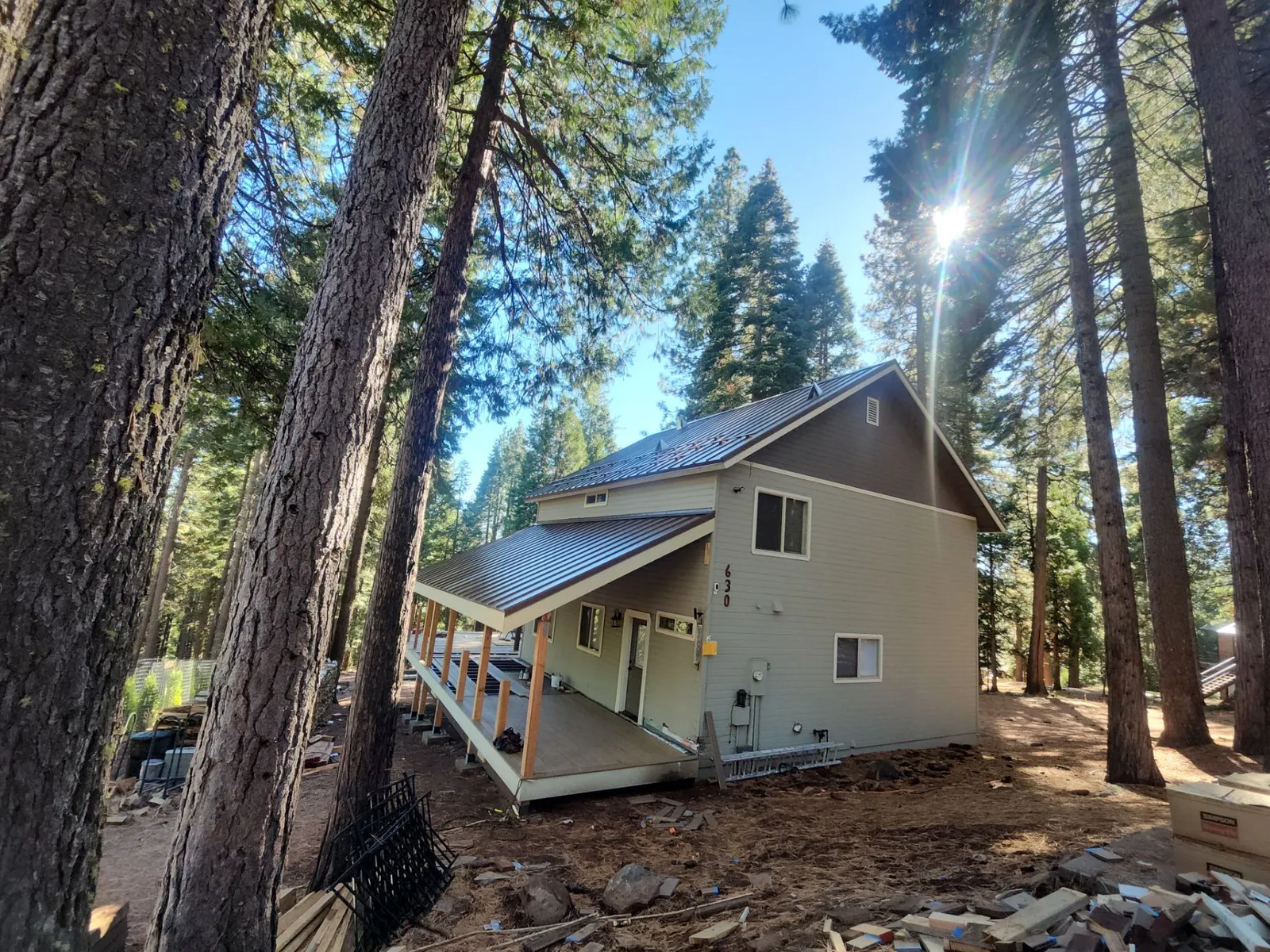
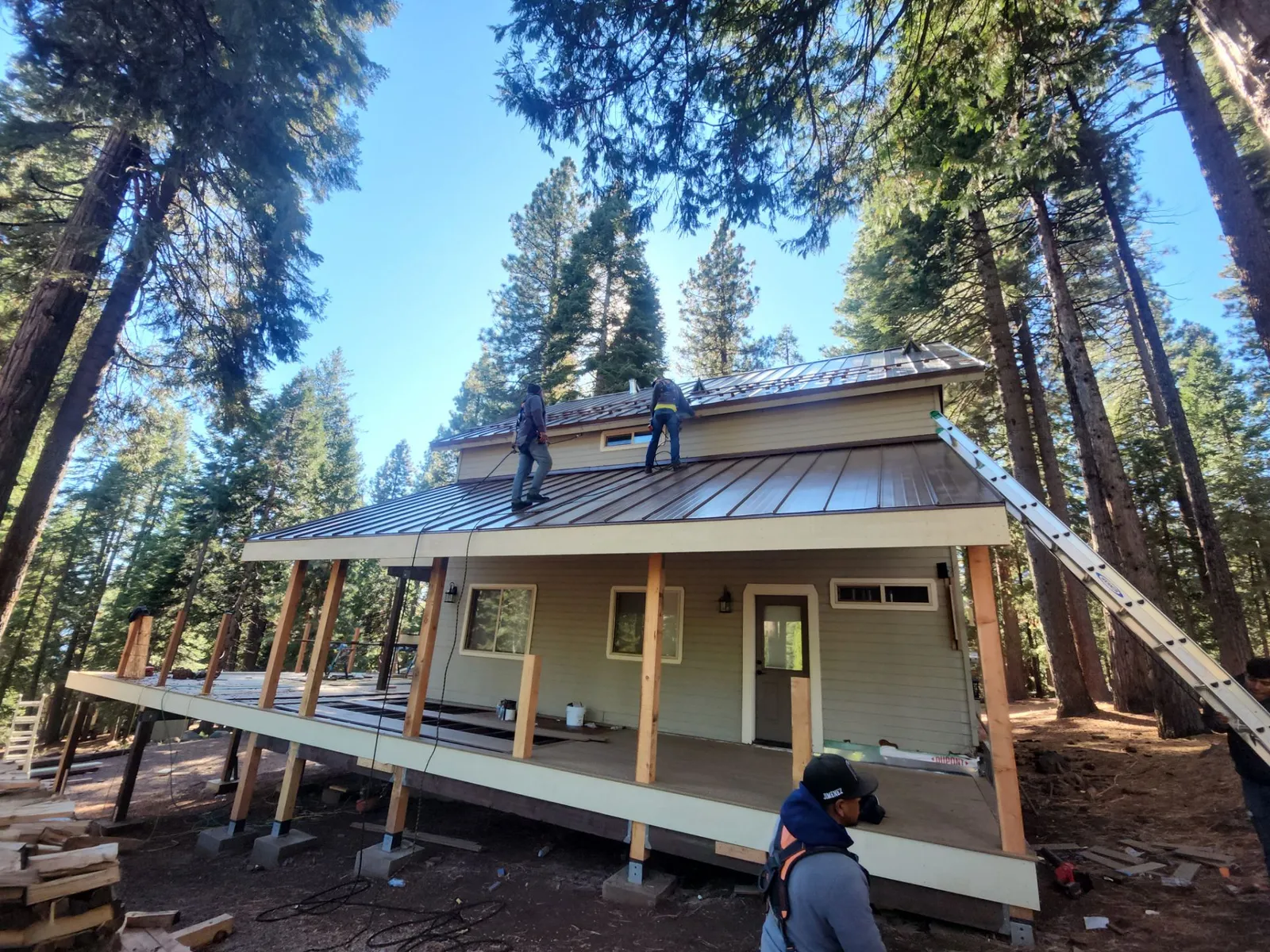
- Standing seam and architectural metal
- Single-ply PVC and TPO membranes on low-slope roofs
The words that matter are "complete assembly." A Class A shingle laid over the wrong underlayment, or a metal panel installed over old wood shake, does not get you a Class A roof. The whole stack has to be right. That is an installation question, not a materials question, and it is where career craftsmen earn their keep.
The 2025 fire maps moved the line into Chico
In February 2025, CAL FIRE released updated Fire Hazard Severity Zone maps for local jurisdictions. Butte County picked up more than 14,000 acres rated Very High and more than 21,000 rated High. The new Very High designations cluster in north Chico, Forest Ranch, and Paradise.
Chico itself went from 117 acres of Very High hazard on the old maps to roughly 3,000 acres. East Chico near Little Chico Creek and the Picholine Way area were called out specifically.
If your home just landed in one of those zones, a few things changed:
- Reroofs and additions have to meet Chapter 7A.
- When you sell, your disclosures must state the zone, and homes in High and Very High zones need a defensible-space inspection at sale.
- Your insurer is looking at the same map.
You can look up your address on the state's official viewer. We check it on every estimate in the foothills because it changes what we are allowed to install.
Vents are the weak point most roofers ignore
A Class A roof with open attic vents is a Class A roof with holes in it.
Chapter 7A requires vents that pass ASTM E2886, the test for ember and flame intrusion. In plain terms, the vent has to stop embers from getting into your attic while still letting the attic breathe. Older quarter-inch screen does not pass. Neither do most of the turbine and box vents installed in the 1980s and 1990s.
When we reroof in a hazard zone, we replace every vent with a WUI-listed vent. It is a small line item on the estimate. It is one of the biggest safety upgrades on the roof.
If you want to understand why attic airflow matters to begin with, read our guide on why attic venting matters.
Gutters, edges, and the debris problem
Chico is the City of Trees for a reason, and the foothills are full of gray pine and ponderosa. Pine needles in a gutter are kindling in a metal trough attached to your fascia.
Chapter 7A requires roof edges and gutters built so debris cannot accumulate. In practice that means gutter guards or covers, metal drip edge, and a bird stop or closure at the eave on tile roofs so embers cannot blow under the first course.
It also means cleaning. A wildfire-ready roof in July is not the same roof by October if nobody has cleared it. Our valley and gutter cleanings exist for exactly this reason.
Zone 0 is coming
In August 2026 the Board of Forestry approved the final draft of the Zone 0 rule, the ember-resistant zone within five feet of the house. It applies to homes in the State Responsibility Area and in Very High zones inside city limits, with phase-in periods for existing homes once it takes effect.
Zone 0 is mostly about landscaping and fencing. But the roof edge is part of that five-foot zone. Combustible debris in gutters and eaves is in the first phase. Vent retrofits are in the second.
We expect this to drive a lot of vent and gutter work across the foothills over the next few years. If you are already planning a roof, do it once and do it right.
What insurance is asking for
The California Department of Insurance's Safer from Wildfires framework requires insurers to offer discounts for specific hardening steps. A Class A roof is on that list. So are ember-resistant vents, enclosed eaves, and a five-foot noncombustible zone.
Some carriers also want to know the age of your roof, and several will not write a policy on a roof older than 25 years. The FAIR Plan now pays only actual cash value on roofs that old.
We document every wildfire-ready roof we install with photos and a materials list so you have what you need to hand to your agent. More on that in our article on roofs and homeowners insurance in Butte County.
Our recommendation for foothill homes
If you live in Paradise, Magalia, Forest Ranch, Cohasset, or the east side of Chico, here is what we install when a customer asks us what we would put on our own house:
- Standing seam metal or Class A architectural shingle over a full synthetic underlayment, with a Class A rated assembly from the manufacturer.
- WUI-listed vents at every intake and exhaust location.
- Metal drip edge, gutter guards, and eave closures at every edge.
- A maintenance plan so the roof stays clean through fire season.
Metal costs more up front. On a home surrounded by pines it is usually the right call, and the manufacturer warranties on premium systems run up to 50 years. We will be here to honor them.
Talk to a roofer who has been through it
We have rebuilt roofs in Paradise since the first permits were pulled. More than 3,400 new homes stand on the Ridge today, and the town has passed 10,000 residents again. We are proud to have played a part.
If you are rebuilding, reroofing, or just want to know whether your current roof would hold up, contact us for an honest evaluation. We will tell you what zone you are in, what the code requires, and what we would do if it were our family's home.
Because in Butte County, that is exactly what it is.