

If you have lived in Chico through a fall, you know the feeling. A storm clears out, the sky goes hard blue, and by afternoon the wind is coming straight down the valley from the north, dry and warm and relentless.
That is the north wind. It shows up mostly in fall and winter, when high pressure builds over the Pacific Northwest behind a departing storm. Air pours south down the Sacramento Valley, warming and drying as it descends. Gusts of 30 to 45 miles per hour are common in a strong event. The Camp Fire spread on those winds on the morning of November 8, 2018.
The north wind is also the single biggest cause of the wind damage calls we get. Here is what it does to a roof and what to do about it.
Why north wind is different from storm wind
Storm winds in Chico usually come from the south and arrive with rain. They are gusty, but they are wet, and they push against the roof from the front of the house on most lots.
The north wind is dry and it is sustained. It can blow for a day or two without letting up. It hits the north-facing slopes, the ridge, and the rakes hard. And it comes right after a storm has soaked and loosened everything.
That combination, wet then dry then wind, is what lifts a roof apart.
What it does to shingles
Asphalt shingles are held down by nails and by a strip of adhesive sealant along each course. That sealant bonds in warm weather. On a roof that is old, or was installed in cold weather, or has been baked by a few Chico summers, the seal fails.
Once the seal is gone, the north wind gets under the exposed edge and lifts. First it creases the shingle. Then it tears it. Then the shingle is in your neighbor's yard.
After a north wind event we see:
- Creased or lifted shingles on north and east slopes
- Missing ridge caps, which take the most wind of anything on the roof
- Tabs torn off along the rakes and eaves
- Exposed nail heads where shingles have shifted
A creased shingle that is still on the roof is already broken. It will leak eventually. That is why we walk the whole roof after a wind event, not just the spot where the shingle is missing.
What it does to tile
Concrete and clay tile is heavy, and people assume wind cannot move it. Mostly that is true, but the north wind finds the exceptions.
Tile at the ridge, hips, and rakes is the most exposed. Older tile roofs in Chico used mortar at the ridges, and that mortar cracks with age and heat. Once it lets go, wind can lift ridge tiles and slide them out. Field tiles that were never fastened, which was common practice in the 1980s, can chatter loose in a strong event.
If you hear tile rattling on a windy night, call us before the rain comes back.
What it does to metal
A properly installed standing seam metal roof handles wind better than anything else we install. The panels lock together and are clipped to the deck. There is nothing for the wind to grab.
Exposed-fastener metal, the kind common on shops and ag buildings around Durham and Orland, is a different story. Screws back out over years of thermal cycling. Once a few fasteners are loose along an edge, wind can peel panels. Annual fastener checks are cheap insurance on those buildings.
Debris is the second wave
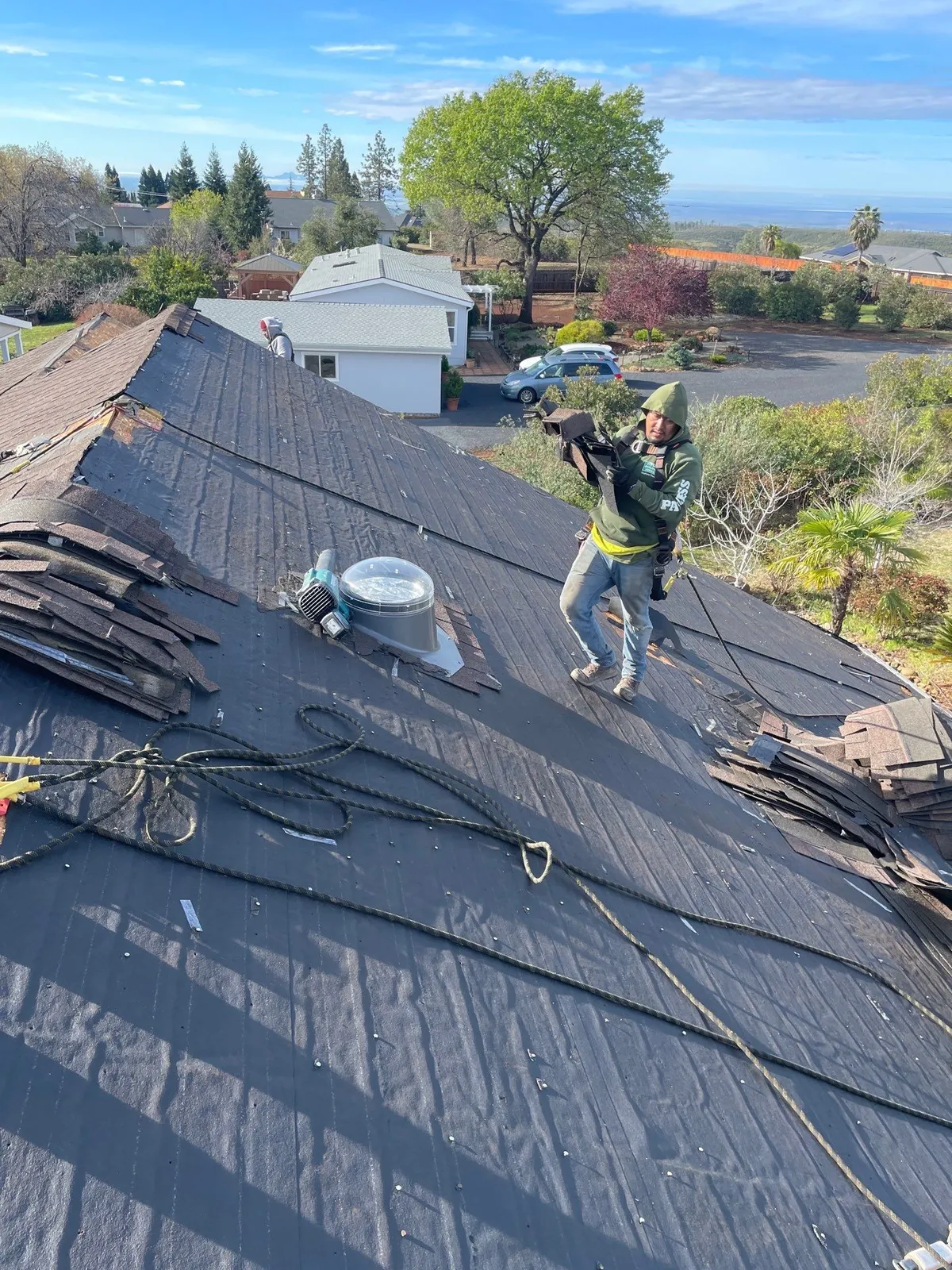
The north wind moves everything that is not tied down. Limbs come off the oaks. Whole branches come off the pines in the foothills. Patio umbrellas, trampolines, and fence panels end up on roofs.
A falling limb can crack tile, tear membrane on a flat roof, and punch through shingle and decking on the worst days. If something big has come down on your roof, do not walk up there to look. Call and let us assess it.
How to spot wind damage from the ground
After a big wind, walk around the house and look for:
- Shingle pieces or tile fragments in the yard
- A ridge line that looks uneven or has gaps
- Shingles that look lifted or "bumped" along a course
- Flashing bent up at the chimney or wall
- Gutters pulled away from the fascia
Then check the attic for daylight. If you see any of it, or you are not sure, our roof repair team will do a full walk and document what they find with photos.
Insurance and wind damage
Wind damage is usually a covered peril under a standard homeowners policy. The trouble is proving it.
Insurers want to see that the damage came from a specific event and not from age and neglect. Photos taken right after the wind, a written inspection report, and a dated repair estimate make the claim clean. Waiting three months and filing after the roof leaks makes it messy.
We photograph and document every wind inspection so you have what you need. We are not an insurance-chasing contractor and we will not inflate a claim. We will tell you what is wind and what is wear, and we will put both in writing.
How we build a roof to hold in the north wind
Wind resistance is mostly about the details.
- Six nails per shingle instead of four, placed on the nail line, not above it. This is the difference between a 60 mph rating and a 130 mph rating on the same shingle.
- Starter strip with a sealant edge at every eave and rake so the first course is bonded down.
- Ridge caps installed with the wind direction in mind, lapped so the north wind is pushing them down, not lifting them.
- Mechanically fastened tile at every ridge, hip, and rake, and foam or clip fastening in the field where the manufacturer calls for it.
- Proper clips and closures on metal so panels cannot lift at the eave.
None of this shows up in a bid from the driveway. It shows up in a roof that is still tight when your neighbor is picking shingles out of the hedge.
When the wind comes
The north wind is part of living here. It clears the smoke, dries the fields, and knocks the last leaves off the oaks. It is also going to test your roof a few times every year.
If your roof took a hit, request a Leak-Stop visit and we will get there fast. If you want to know how it will hold up before the next one, schedule an evaluation. We have been watching the north wind work on Chico roofs since 1950. We know what it looks for.