
Chico is a good place for solar. We get long, clear summers, PG&E rates are high, and every new home built here since 2020 has panels on it by state mandate.
We are not a solar company. We are the people who get called when a solar array is leaking, or when a 12-year-old roof needs replacing and there are 24 panels sitting on it.
Both calls happen more than they should. Here is how to avoid them.
The roof lasts longer than you think and shorter than the panels
A solar array is designed to produce power for 25 years or more. A typical asphalt shingle roof in Chico lasts 20 to 25 years, and our summers push it toward the low end. Read how long shingles last for the details.
That math is the whole problem. If you put new panels on a roof that has 10 years left, you are going to pay to remove the panels, replace the roof, and reinstall the panels halfway through the life of the system. That removal and reinstall is not cheap, and it is not something the solar company's warranty covers.
The National Roof Certification and Inspection Association says it plainly: replace a roof that is nearing the end of its life before the panels go on. We say the same thing.
Get the roof inspected before you sign a solar contract
Most solar companies do a quick look at the roof. Some do not look at all. Their job is to sell panels, and a reroof is a delay.
Before you sign, have a roofer who is not selling you solar inspect the roof and put an honest remaining-life estimate in writing. If it is under 10 years, reroof first. If it is 15 or more and in good shape, you are probably fine to proceed.
We do this inspection for Chico homeowners all the time. We will tell you the truth even when it means you do not need us yet.
What a solar-ready reroof includes
If you are reroofing with solar in mind, a few things should be part of the job.
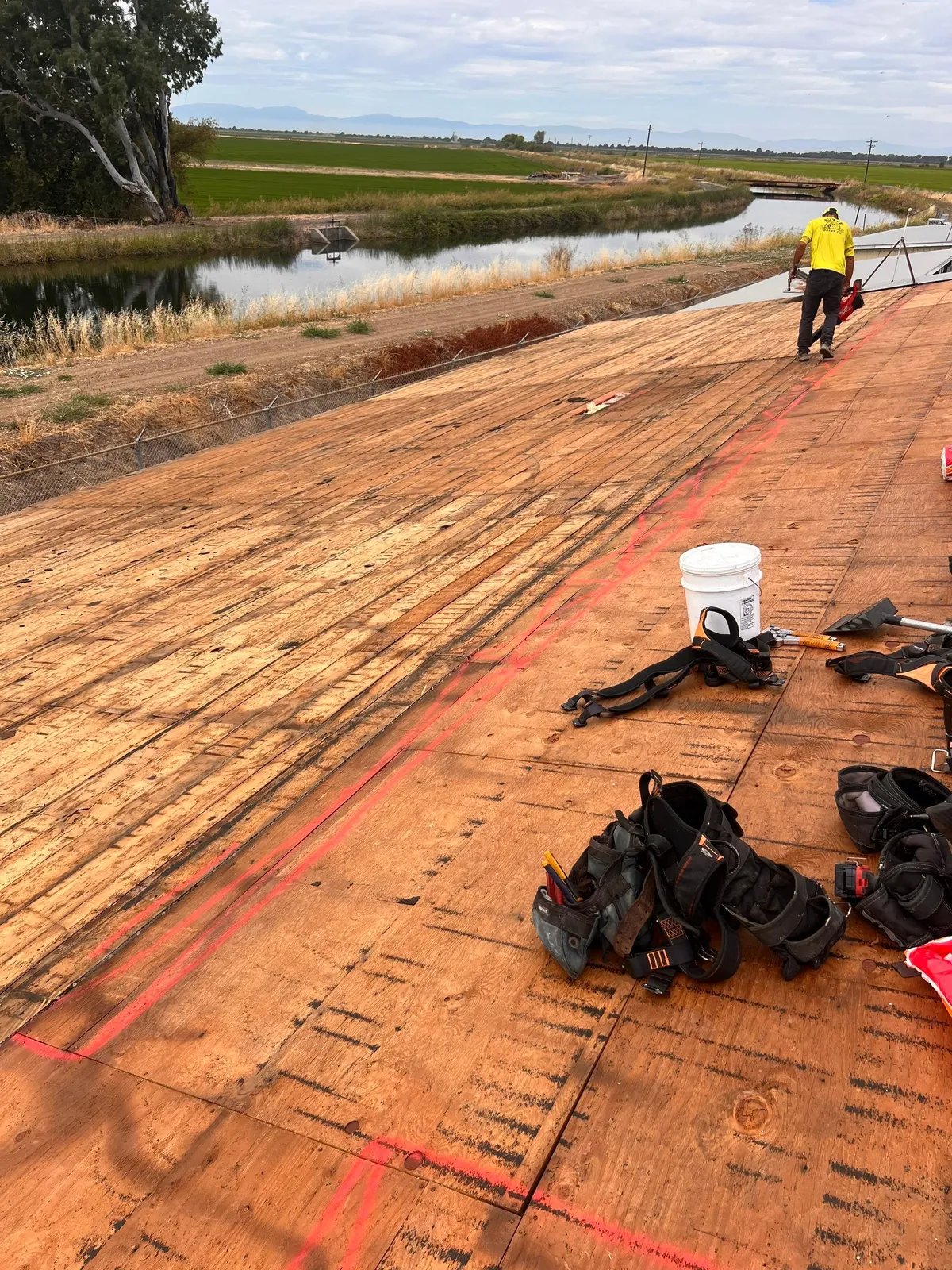
Solid decking. Panel racks are lag-bolted into the rafters through the decking. We replace any soft or delaminated sheathing so the mounts have something to hold.
A premium underlayment. The underlayment is the last line of defense under a penetration, and a solar array adds dozens of penetrations. A full synthetic underlayment or a self-adhered membrane under the array area is worth the money.
Layout planning. Tell us where the array is going. We can keep vents, pipes, and skylights out of that area so the installer has a clean field, and we can make sure the attic ventilation still works around the panels.
Class A rating. If you are in one of Chico's fire hazard zones, the roof has to be Class A and the vents have to be ember-resistant regardless of solar. Do it as one project.
Documentation. A reroof done right before solar should come with a permit record and a warranty that covers the roof under the panels. Ask any roofer to put that in writing.
NEM 3.0 changed the economics
PG&E moved to its Solar Billing Plan, often called NEM 3.0, in April 2023. Under it, the credit you receive for power you send back to the grid dropped sharply compared to the old net metering.
This has two effects for a Chico homeowner. First, the payback period on solar is longer than it was, which makes it more important that the roof underneath does not add a surprise cost. Second, batteries now make sense for a lot of households, and a battery system means more equipment and more conduit on and around the roof.
Neither is a reason not to go solar. Both are reasons to plan it as part of the roof rather than in spite of it.
Panel removal and reinstall when a roof does need replacing
Sometimes the roof under the array is done and the panels are not. We handle this regularly.
The process is to coordinate with a licensed solar contractor to detach and store the panels, reroof, then have the panels reinstalled and the system recommissioned. The roof work is ours. The electrical work is theirs. We schedule it so the array is off the roof for as few days as possible.
If your original solar installer is out of business, which is common in California, we can point you to local companies who do removal and reinstall.
Leaks around solar mounts
When a solar array leaks, the leak is almost always at a mount. Either the lag bolt missed the rafter, the flashing under the mount was skipped, or the sealant has failed after a few summers.
These are repairable without removing the whole array. Our roof repair crews trace the leak from inside the attic, lift the affected panels, and flash the mount correctly. If the array was installed on a roof that was already marginal, we will tell you that too.
The right order
- Have the roof inspected by a roofer with no stake in the solar sale.
- If it needs replacing in the next 10 years, reroof first, built for solar.
- Choose your solar installer and give them a clean roof to work on.
- Keep the roof warranty, permit, and photos together with your solar paperwork.
Chico is going to keep adding solar. The homes that do it in the right order will save money for 25 years. The ones that do not will call us in year 12.
Contact us for a pre-solar roof inspection. We will give you an honest read on the roof and a written estimate of what it has left.