July 2024 gave Chico sixteen days at or above 100 degrees. The high on July 5 was 115.
That was one month.
The average high in Chico in July is about 95. Our record is 117. A normal summer here brings a few dozen triple-digit days, and the heat does not let up at night the way it does closer to the coast.
Your roof takes all of it. Here is what that heat actually does to a roof, why some roofs in Chico fail a decade early, and what the state's new cool roof rule means if you are reroofing in 2026.
A roof in Chico runs hotter than the air
On a 100-degree afternoon, a dark asphalt shingle roof can hit 150 to 170 degrees at the surface. The attic underneath runs well above 120.
Then the sun goes down, and the roof cools by 60 or 70 degrees in a few hours. It does that every day from June through September.
That daily swing is called thermal cycling. Every material on your roof expands in the afternoon and contracts at night. Shingles, flashing, sealant, nails, decking. Over thousands of cycles, the weakest joints let go.
We see the results on inspections all over Chico, from the Avenues to California Park to Doe Mill:
- Shingles that have lost their granules and turned gray or bald
- Shingle edges curling up and exposing the nail line
- Sealant at pipe boots and flashing cracked open like dry mud
- Ridge caps split down the middle
- Plywood decking that has delaminated from years of attic heat
None of that shows up from the driveway. It shows up as a leak in November.
UV is the other half of the problem
Heat softens asphalt. Ultraviolet light breaks it down. Chico gets both in heavy doses because we sit in a valley with very few cloudy summer days.
Asphalt shingles are protected by their granules. The granules block UV. When the granules wash off into your gutters, the asphalt underneath is exposed and starts to dry out and crack. Once that starts, it does not stop.
This is why a 30-year shingle is often a 20-year shingle in the North Valley. Our article on how long shingles last goes deeper on the numbers, but the short version is that Chico is one of the harder climates in California on a roof.
Tile and metal handle heat differently
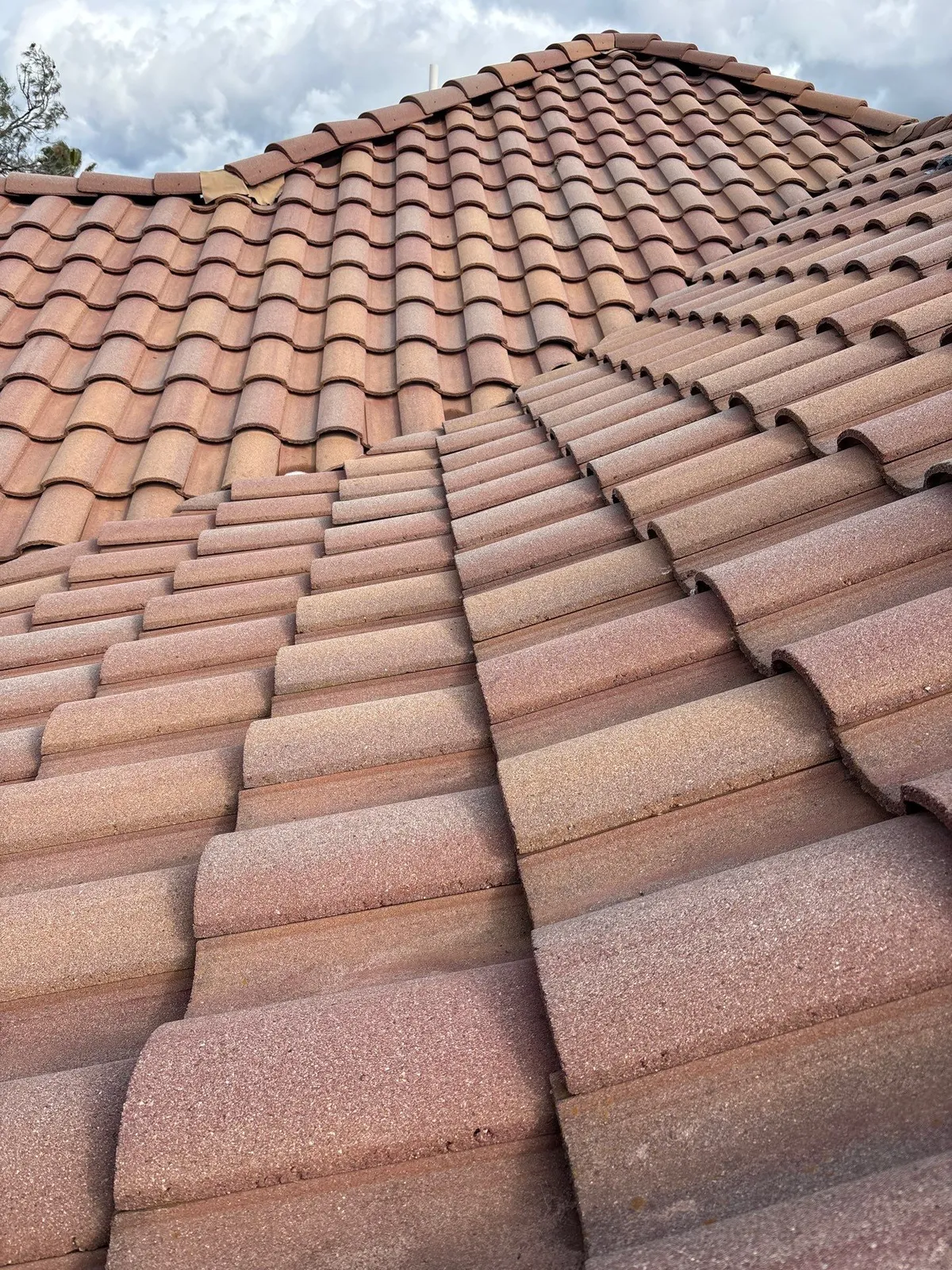
Concrete and clay tile roofs are common in Chico neighborhoods built in the 1980s and 1990s, and there is a good reason. Tile does not care about UV. It creates an air gap above the underlayment that keeps the deck cooler. A tile roof can last 50 years or more here.
The catch is what is underneath. The underlayment beneath tile is what actually keeps water out, and heat cooks it just the same. Most tile roofs in Chico that "fail" have perfectly good tile sitting on dead felt. The fix is a lift and relay: pull the tile, replace the underlayment and flashings, and put the tile back.
Metal handles heat best of all. It reflects a large share of solar energy, it does not have granules to lose, and a standing seam system is designed to expand and contract without stressing its fasteners. On a hot, sunny lot with no shade, metal is usually the longest-lived option we can offer.
The new cool roof rule for Chico
Chico sits in California Climate Zone 11. Starting January 1, 2026, the 2025 Title 24 Energy Code requires most steep-slope residential reroofs in Zone 11 to use a cool roof product when more than half of the roof is replaced.
The numbers for a sloped roof: aged solar reflectance of at least 0.20, thermal emittance of at least 0.75, or a Solar Reflectance Index of 16 or better. Low-slope residential roofs have a much higher bar, an aged reflectance of 0.63 or an SRI of 75.
There are exceptions. If your roof weighs 25 pounds per square foot or more, like tile, or you have R-38 attic insulation or a radiant barrier, the cool roof requirement may not apply. Solar panels built into the roofing count too.
What does this mean in practice? Most architectural shingle lines now include cool-rated colors, and they are not all white. Many medium browns and grays qualify. Metal and tile qualify easily. Your reroof estimate from us will spell out which product and color meets the code, and we pull the permit with the City of Chico so the inspection is not a surprise.
Attic ventilation is the cheapest heat fix you have
We say this in almost every article because it is true. A roof with a 130-degree attic underneath it is aging twice as fast as it needs to.
Balanced intake and exhaust venting pulls the hot air out and keeps the deck and the underside of the shingles cooler. On most Chico homes built before 2000, the venting is undersized or blocked by insulation. We correct that on every reroof. It is part of the system, not an upgrade.
Read why attic venting matters if you want the full explanation.
What you can do this summer
You do not have to replace your roof to protect it from the heat.
- Get the roof inspected before the rainy season, when the damage from summer is easiest to spot and cheapest to fix.
- Have sealant at pipe boots, flashings, and skylights refreshed. It is the first thing the heat kills.
- Make sure the attic vents are open and the intake is not buried in insulation.
- If your roof is over 15 years old, ask for an honest read on how many summers it has left.
We have been inspecting roofs in this heat for three generations. We know what a Chico roof looks like at 10 years, at 20, and at the end. We will tell you which one you have.
Request a roof evaluation before the first storm rolls through.