
The first big storm of the season always finds the weak spots.
If water is coming through your ceiling right now, here is the short version. Move valuables and electronics away from the drip, catch the water, and poke a small hole in any bulging ceiling paint so it drains into a bucket instead of collapsing. Stay off the roof. Take photos. Then call a roofer to stop the water with a tarp or temporary repair until the weather clears.
That is the first hour. The rest of this article explains each step, where Chico leaks actually come from, and what happens next.
Why leaks show up all at once in Chico
Chico gets about 25 to 27 inches of rain a year, and almost all of it falls between November and April. For five or six months before that, the roof bakes in 100-degree heat. Sealants shrink and crack. Pipe boots split. Leaves and needles pile up in valleys and gutters.
Then an atmospheric river parks over the North Valley and drops two or three inches in a day. Every small problem gets tested at the same time. That is why our phones light up after the first real storm every fall, and why the best time to deal with a leak is before it starts. Our rainy season roof checklist covers that.
If it is already raining inside, start here.
Step 1: Protect the inside of the house
Water damage inside the house usually costs more than the roof repair. Act on this first.
- Catch the water. Buckets, trash cans, a kiddie pool in the attic. Put a towel in the bucket so the dripping is quieter.
- Move what matters. Electronics, furniture, rugs, photos, and anything paper.
- Drain a bulging ceiling. If drywall or paint is sagging with water, put a bucket under it and push a screwdriver through the lowest point. A controlled drain beats a ceiling that gives way.
- Watch the lights. If water is near a light fixture, ceiling fan, or outlet, turn off that circuit at the panel.
- Check the attic. If you can get up there safely, look for wet insulation. Pull soaked insulation away from the wet spot so it does not hold water against the drywall.
Step 2: Stay off the roof
We mean this. A wet roof is slick, and tile and metal roofs are worse. Most roof falls happen to homeowners trying to throw a tarp in the rain.
A tarp also only works if it is installed right. It has to run over the ridge, be secured without punching new holes in the roof, and be weighted so the wind does not turn it into a sail. Leave it to a crew with harnesses and the right materials.
Step 3: Document everything
Before anything gets cleaned up, take photos and short videos:
- The water stain or drip inside, with something in the frame for scale
- Any damaged belongings
- The ceiling and walls, wide and close
- The outside of the roof from the ground, if it is safe to step out
- Any obvious cause, like a fallen limb or missing shingles
Write down the date and time the leak started. If the cause is sudden, like a tree limb or wind damage, many policies cover it. Wear and tear usually is not covered. A roofer's written findings and photos help either way. Our article on roof age and homeowners insurance in Butte County explains how carriers look at older roofs.
Step 4: Get the leak stopped
Call us at (530) 342-6553 and ask for Leak-Stop. That is our dedicated service crew for active leaks. They stop the water with a tarp or a temporary repair so the house stays dry until a permanent fix can go in. Dispatch is often the same day, depending on call volume during a storm.
You can also submit a Leak-Stop request online with photos and a description, which helps the crew arrive with the right materials.
Commercial building with a leak on a flat roof? Call the same number. Our emergency roofing service covers membrane punctures, drain failures, and storm damage on low-slope roofs too.
Where the water is actually coming in
A stain on your living room ceiling rarely sits directly under the hole. Water hits the decking, runs downhill along rafters or the underlayment, and drops wherever it finds a seam. Finding the true source is the real work of leak repair.
Here are the places we find most Chico leaks, in rough order:
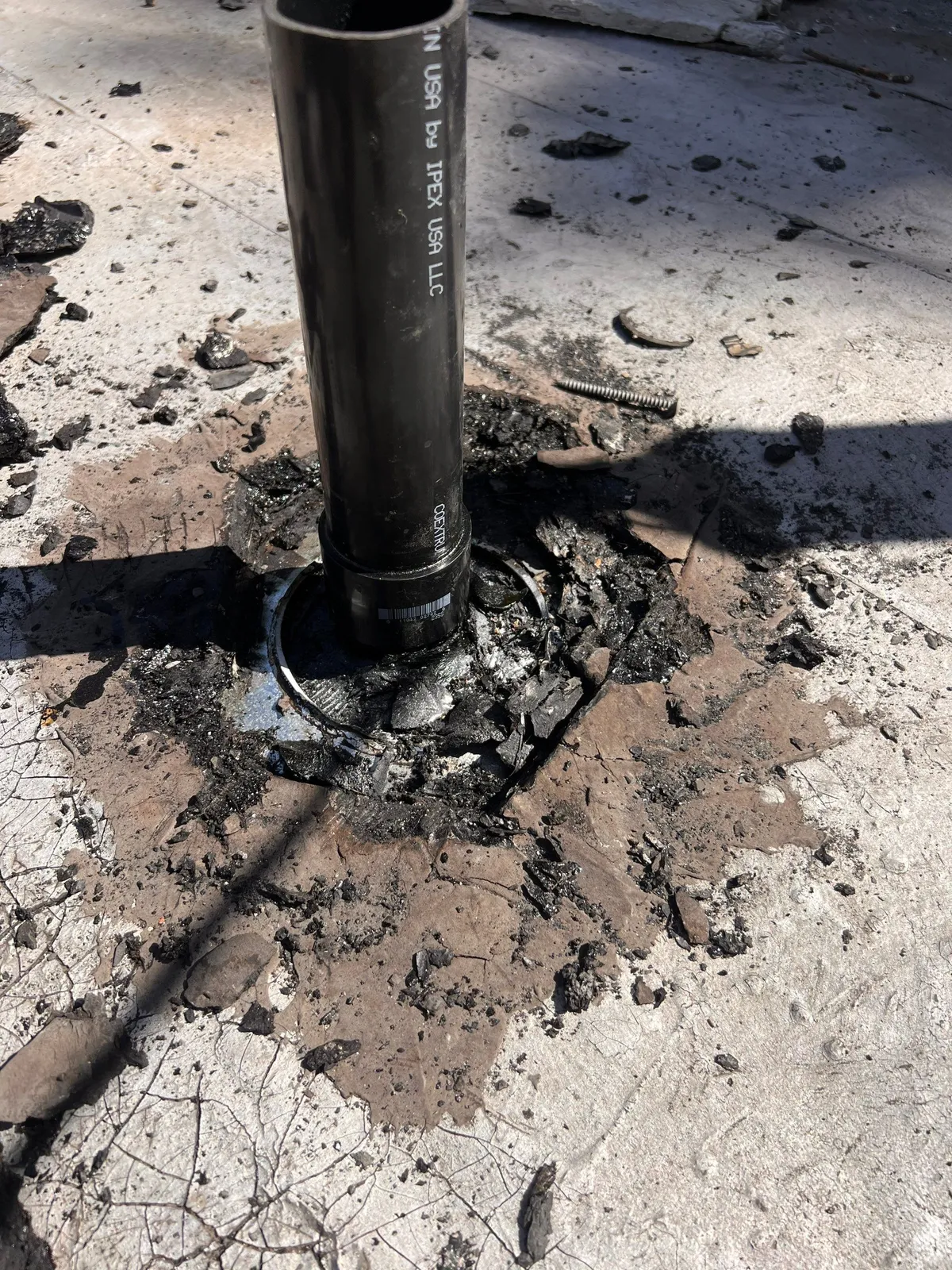
- Pipe boots. The rubber collar around plumbing vents cracks after a few Valley summers. This is the most common leak we fix, and one of the least expensive.
- Chimney and wall flashing. Old step flashing rusts, and caulk-only repairs from years past fail.
- Valleys. Where two roof slopes meet, water concentrates. Leaves and needles dam it up, and water backs under the shingles or tile.
- Skylights. The flashing kit, not the glass, is the usual culprit.
- Cracked or slipped tile. On tile roofs, the tile is not the waterproof layer. The underlayment is. Cracked tile lets more water reach underlayment that may already be worn out. See tile roof repair in Chico.
- Wind-lifted shingles. After a north wind event, shingles can be creased or unsealed even if none are missing. See north wind roof damage.
- Clogged gutters and downspouts. Overflowing gutters can push water back under the roof edge and into the fascia and eaves.
- Tree damage. Chico is the City of Trees for a reason. Limbs that rub or fall puncture roofs every winter. See trees and your roof.
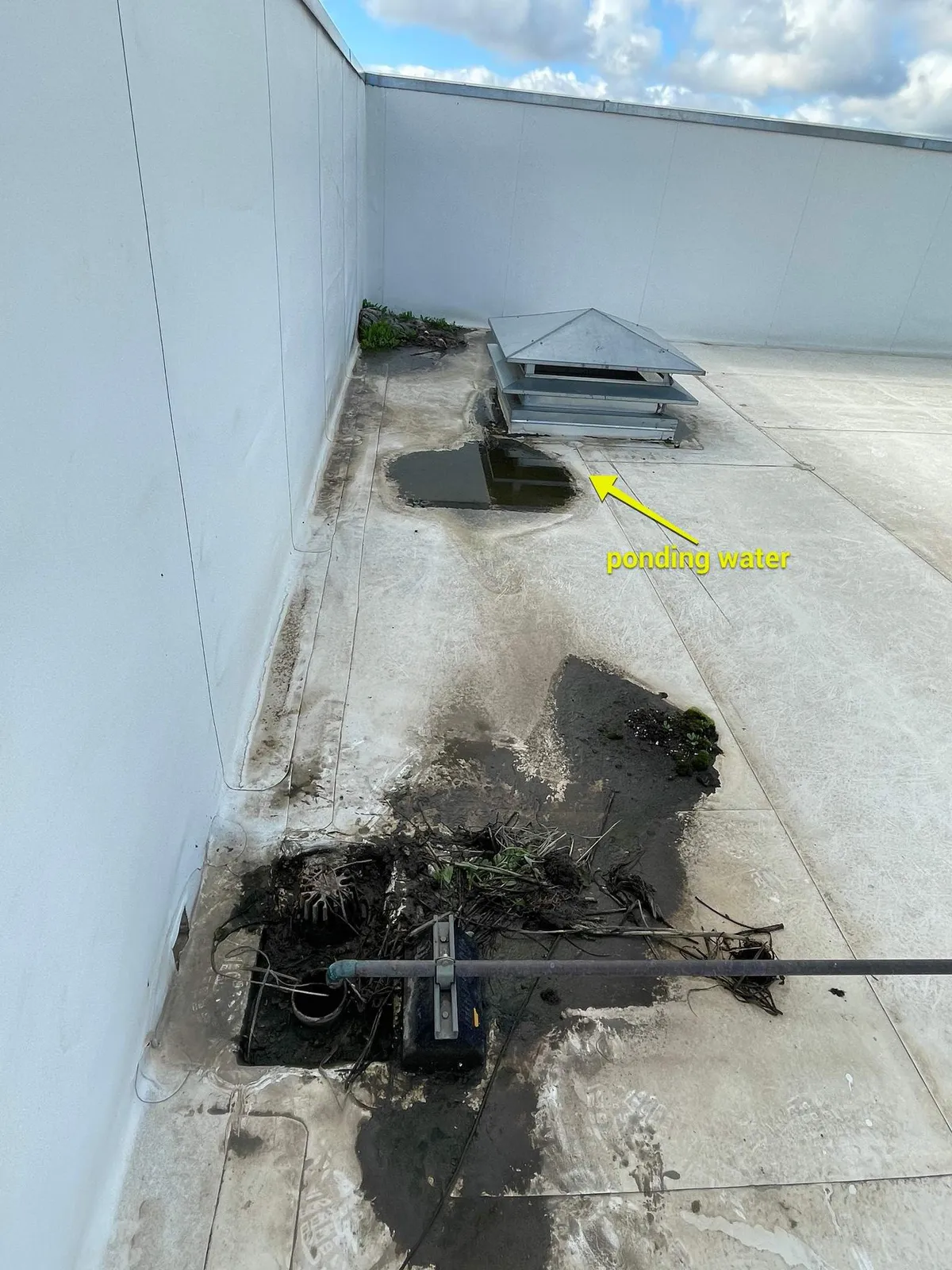
On flat and low-slope roofs, water that sits for more than 48 hours points to a drainage problem. Seams, drains, and the flashing around rooftop equipment are where those leaks start.
Temporary fix vs. permanent repair
The emergency visit and the permanent repair are often two different trips.
The temporary fix happens in the rain. The goal is simple: stop the water. That might be a tarp over the ridge, sealant on a split pipe boot, or a patch over a puncture.
The permanent repair happens once the roof is dry enough to work on safely and correctly. We replace the failed flashing, boot, tile, or shingles, check the decking underneath, and make sure the fix ties in with the roof around it. Most permanent repairs are done in a single visit.
Sometimes the inspection shows the leak is a symptom of a roof at the end of its life. Several leaks at once, soft decking, or shingles that crack when lifted all point that way. When that is the case, we will tell you plainly and give you a written replacement estimate. Our guide to roof repair vs. replacement walks through how to decide.
What not to do
A few well-meaning moves make leaks worse:
- Do not caulk from the inside. Water will find another path, and you will hide the evidence of where it came in.
- Do not smear roofing tar over shingles or tile. It traps water, makes a proper repair harder, and can void manufacturer warranties.
- Do not wait for the dry season. Wet decking and insulation grow mold, and a small leak can rot the sheathing around it in a single winter.
- Do not pay a storm chaser in full up front. After big storms, out-of-area crews knock on doors. Check any contractor's license with the Contractors State License Board before you sign. Ours is CSLB# 567600.
Head off the next leak
Once the leak is fixed, a few habits keep it from coming back:
- Clean gutters in late fall, after the leaves drop, and again midwinter if you have big trees.
- Trim limbs back at least six feet from the roof.
- Have pipe boots and flashings checked before the first storm, especially on roofs over 15 years old.
- Schedule an inspection after any major wind event.
Frequently Asked Questions
What should I do first if my roof is leaking during a storm?
Protect the inside of the house first. Catch the water, move valuables, and drain any bulging ceiling into a bucket. Stay off the roof. Take photos for insurance, then call a roofer to tarp or temporarily patch the leak until the weather clears.
Can a roof be repaired while it is raining?
A roofer can usually stop an active leak in the rain with a tarp or temporary patch. The permanent repair is done once the roof is dry enough to work on safely, because sealants and flashing need a dry surface to bond correctly.
Why is my roof leaking now when it didn't last winter?
Chico's long, hot summers dry out sealants and crack rubber pipe boots. Debris also builds up in valleys and gutters over the dry months. The first heavy storm of the season tests all of those weak points at once.
Will homeowners insurance cover a roof leak?
Many policies cover sudden damage, like a tree limb or wind tearing off shingles. Leaks from age and normal wear usually are not covered. Document the damage with photos and get a roofer's written findings to support your claim.
How do I know if I need a roof repair or a new roof?
One leak at a single flashing or pipe boot is almost always a repair. Multiple leaks, soft or rotted decking, widespread granule loss, or a roof past 20 years old often point to replacement. A roofer's inspection will tell you which.