
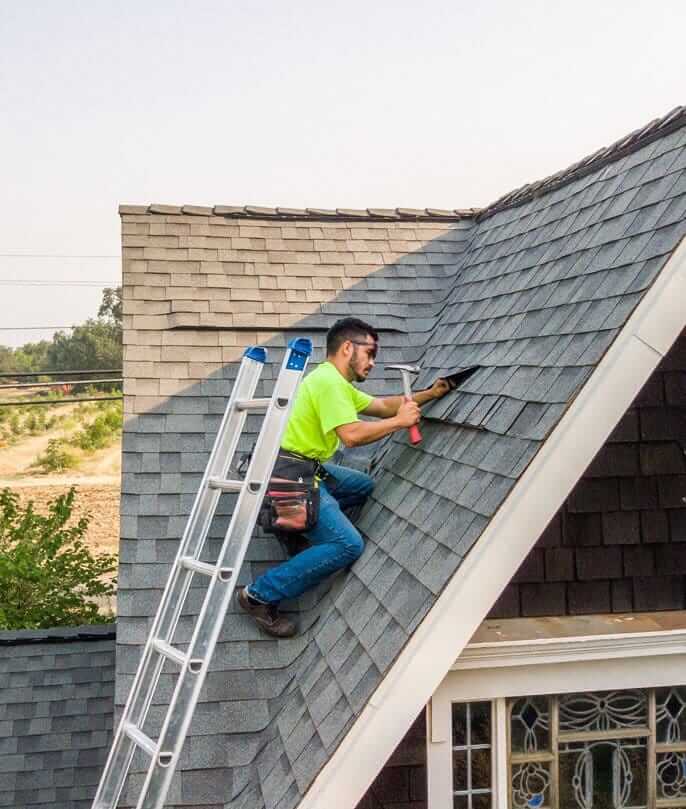
Roof Replacement in Quincy, CA
Butte Roofing replaces residential roofs in Quincy, CA and the American Valley — standing-seam metal and snow-rated shingle systems built for Plumas County's winters at 3,400 feet, with ice-and-water membrane at the eaves, snow retention, Class A fire-code assemblies, the Plumas County permit handled and a 5-year workmanship warranty. In-house crews from Chico, up the Feather River Canyon.
Quincy is the one mountain town in our service area where snow is the main design condition rather than a footnote. Winters here bring feet of snow, not inches, and a roof that would be fine in Chico can fail its first February in the American Valley. We have roofed Quincy for decades and we build for the mountains.
- Since 1950
- GAF Master Elite
- In-house residential crews
- 5-year workmanship warranty
Want a ballpark before we visit? Our instant quote tool prices a Quincy roof from satellite measurements in about a minute.
Instant roof quoteRoofing at 3,400 feet
Quincy sits at roughly 3,400 feet in the American Valley, surrounded by the Plumas National Forest, and gets true Sierra winters: repeated snowfalls that pile up on roofs, freeze-thaw cycles that turn snow into ice at the eaves, and spring melts that find any weakness in the roof.
Plumas County sets design snow loads for a reason, and a Quincy re-roof starts with the structure — we look at the rafters, the pitch and the existing sheathing before choosing a system.
Ice-and-water membrane goes on the full eave area and up every valley, not just a strip; attic ventilation is designed to keep the deck cold so snow melts evenly instead of damming at the eaves; and on metal roofs we install snow retention above doors, decks, walkways and anywhere a sliding sheet of snow would land on a person, a car or a propane tank.
Metal is the mountain roof, and why
Standing-seam metal is the system we recommend for most Quincy homes, because it does what a mountain roof has to do: it sheds snow before the load builds, it does not absorb water and freeze, it is Class A for the fire code, and it lasts 40 years or more in a climate that is hard on everything.
Where a homeowner prefers shingle — on a historic home in town, or for budget — we use heavy architectural shingles rated for the climate, installed over full ice-and-water at the eaves with a steep enough pitch to shed, and we are honest about the trade-off in life span.
Because Quincy is in California's mountain climate zone, the valley's cool-roof rule does not apply here; what matters instead is snow, ice and fire, and the details are built around those.
Fire code in the forest
Quincy and the American Valley sit inside the State Responsibility Area, in and around Very High Fire Hazard Severity Zones, and after the fires that have burned through Plumas County in recent years the fire code is taken seriously.
Replacement roofs must meet Chapter 7A of the California Building Code: a Class A assembly from the deck up, ember-resistant attic and eave vents, protected eaves, and non-combustible gutters and edge details. Metal meets it by nature; fire-rated shingle over a Class A underlayment meets it as a listed assembly. Wood shakes, still common on older Quincy homes, cannot be replaced in kind.
We build to the listed assembly and provide the documentation the Plumas County inspector and, increasingly, your insurance carrier want to see.
Permits, timing and the drive up the canyon
Quincy is the county seat, and re-roof permits come from the Plumas County Building Department in town; we pull the permit, provide the snow-load and Class A documentation and meet the inspector. Timing matters more here than anywhere else we work: the roofing season runs from late spring into fall, and we schedule Quincy jobs for dry weather with a close eye on the forecast.
Because it is a drive up the Feather River Canyon from Chico, our crews stage material and equipment on-site and work the job straight through — typically three to five days for a home, longer for metal on a complex roof.
Our crews are Butte Roofing employees with one foreman from start to finish, and every roof leaves with the manufacturer warranty registered in your name and our 5-year workmanship warranty.
+What roof is best for snow in Quincy?
Standing-seam metal with snow retention above entries and walkways. It sheds snow before the load builds, does not freeze and hold water, and is Class A for the fire code. Heavy architectural shingle rated for snow country is the alternative for homeowners who prefer it.
+What are ice dams and how do you prevent them?
Ice dams form when a warm attic melts snow that refreezes at the cold eaves, backing water up under the roof. We prevent them with full-eave ice-and-water membrane and attic ventilation that keeps the deck cold so snow melts evenly.
+Does the fire code apply in Quincy?
Yes. Quincy is in the State Responsibility Area in a Very High Fire Hazard Severity Zone, so replacement roofs must be Class A assemblies under Chapter 7A with ember-resistant vents and protected eaves. Wood shakes cannot be replaced in kind.
+Do I need a cool roof in Quincy?
No. Quincy is in California's mountain climate zone, where the valley's cool-roof requirement does not apply. Snow, ice and fire are the design conditions here.
+When can you do the work?
Late spring through fall, in dry weather. We stage material on-site and run the job straight through, usually three to five days.
+Who issues the permit?
The Plumas County Building Department in Quincy. We pull the permit, provide the snow-load and Class A documentation, and meet the inspector.
Your rooferfor life.
Free estimates. Honest answers. Here when you need us.