
Flashing is the thin metal (and sometimes rubber) that seals the joints on your roof: around chimneys, skylights, vent pipes, walls, and valleys. It is also where most roof leaks start. A roof can have plenty of life left in the shingles or tile and still leak because one piece of flashing has rusted, pulled loose, or cracked.
The good news is that flashing problems are usually repairable without replacing the roof. The catch is that they have to be repaired correctly, and a lot of what we see on Chico roofs is caulk smeared over a problem instead of a real fix.
What flashing does
Any place the roof surface is interrupted is a weak point. Water running down the roof hits a chimney, a wall, or a pipe and has to be directed around it. Flashing does that job.
The main types on a house:
- Pipe boots (vent flashing): A metal or plastic base with a rubber collar that seals around plumbing vent pipes.
- Step flashing: Individual L-shaped pieces woven into each course of shingles where a roof meets a side wall or chimney.
- Counterflashing: Metal set into the chimney or wall that laps over the step flashing so water cannot get behind it.
- Headwall and apron flashing: Where the top or bottom of a roof slope meets a wall.
- Valley flashing: Metal in the valleys where two roof slopes meet, especially on tile roofs.
- Kick-out flashing: A small diverter at the bottom of a roof-to-wall joint that turns water into the gutter instead of down the siding.
- Skylight flashing: A kit of step and head flashings, or a curb flashing, that seals around the skylight frame.
How flashing fails on Chico homes
Pipe boots crack in the sun
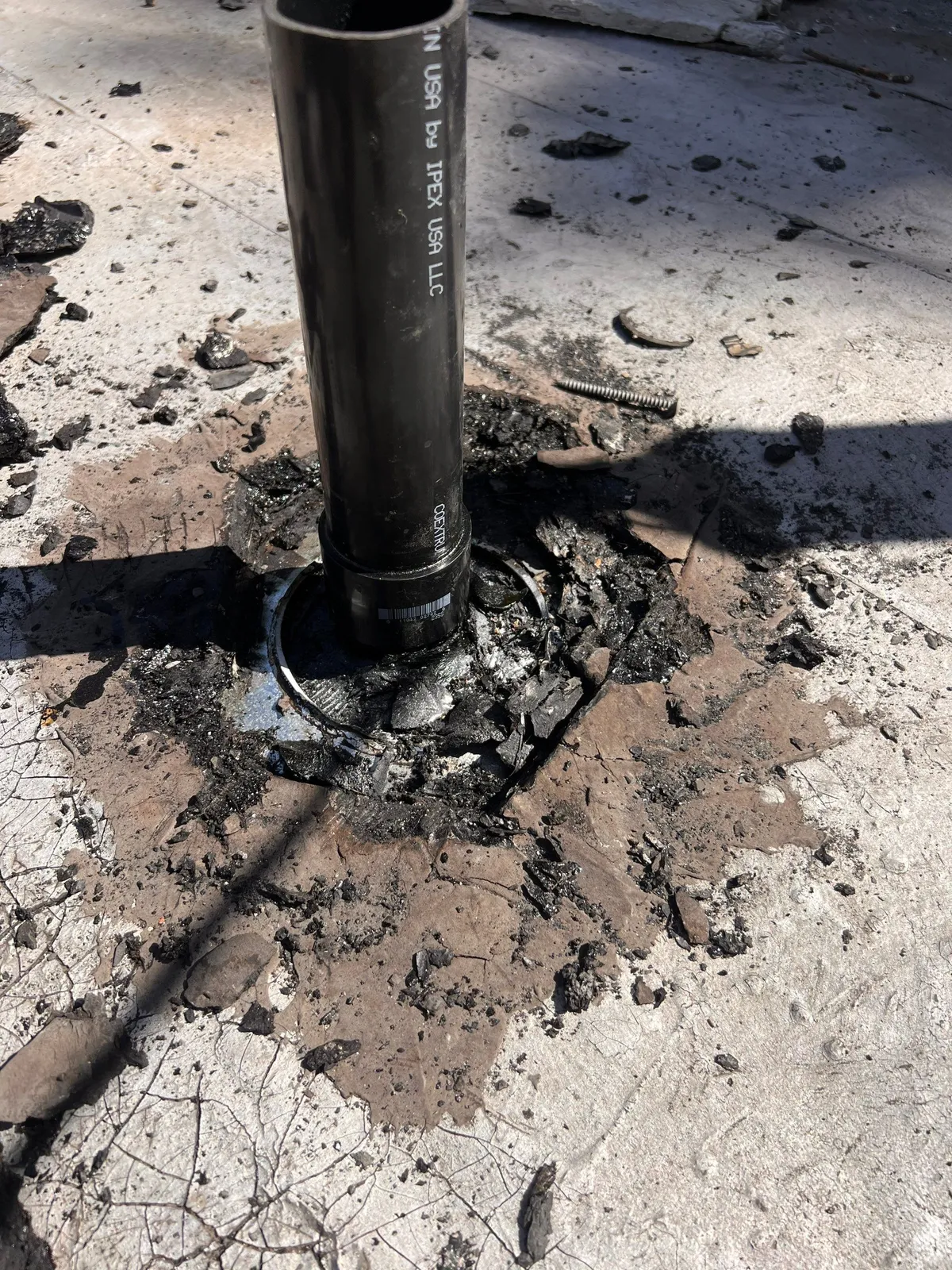
This is the most common flashing failure we see in the North Valley. The rubber collar on a standard pipe boot sits in full sun all summer. After years of 100-degree days, the rubber dries out, cracks, and pulls away from the pipe. Rain runs straight down the pipe into the attic.
On many roofs the boots wear out long before the shingles do. That is one reason a roof that is only 12 or 15 years old can start leaking. We wrote about what summer heat does to roofing materials in what 100-degree Chico summers do to your roof.
Chimney flashing pulls loose
Brick chimneys move a little with heat and settling, and the roof moves differently. Over time counterflashing pulls out of the mortar joint, sealant at the top dries out, and water gets behind the step flashing. On older homes we often find no counterflashing at all, just a bead of roofing cement where metal should be.
Wide chimneys have another problem. Water and debris pile up behind them on the uphill side. Building codes call for a cricket (a small peaked diverter) behind chimneys wider than 30 inches. Many older Chico homes never had one.
Skylights leak at the flashing, not the glass
When homeowners say their skylight leaks, it is usually the flashing around it, not the skylight itself. Older skylights were often installed with sealant in place of a proper flashing kit. Once the sealant fails, water comes in at the corners. Condensation on the inside of an older single-pane skylight can also look like a leak, so it is worth having it checked before assuming the worst.
Wall flashing and missing kick-outs
Where a lower roof meets a two-story wall, water runs down the joint all winter. Missing or short step flashing lets water behind the siding. Missing kick-out flashing at the bottom dumps water down the wall instead of into the gutter. That often shows up as rotted siding or trim under the roof edge, not as a ceiling stain.
Rust and wind
Older galvanized flashing rusts through, especially in valleys where leaves sit wet all winter. And the north wind can lift and bend loose flashing, which breaks the seal. If your roof took a beating in a wind event, our article on north wind roof damage covers what to look for.
Warning signs of a flashing leak
- Water stains on the ceiling near a chimney, skylight, or exterior wall
- Drips or stains on the attic side of a vent pipe
- Damp or rotted wood around a chimney chase or skylight well
- Stains or bubbling paint on interior walls under a roof-to-wall joint
- Rotted siding or trim below where a roof meets a wall
- Visible gaps, rust, or bent metal around roof penetrations
- Cracked rubber around vent pipes (you can often see this with binoculars)
- Thick layers of roofing tar or caulk around chimneys and pipes, which usually means someone has been chasing a leak
Leaks travel. Water can run along a rafter several feet before it drips, so a stain in the middle of a ceiling can still come from a pipe or chimney. Finding the true source is half the job.
What a proper flashing repair involves
A real flashing repair is not a tube of caulk. Sealant has a place as a backup, but it should never be the thing keeping water out. Under Chico sun, exposed sealant breaks down within a few years.
Depending on the problem, a proper repair looks like this:
- Pipe boots: Remove the shingles above the boot, replace the boot with a longer-lasting version, and weave it back into the roof so the upper shingles lap over it.
- Chimneys: Remove old flashing, install new step flashing course by course, cut a reglet into the mortar joint, and set new counterflashing that laps over the step flashing. Add a cricket if the chimney is wide enough to need one.
- Skylights: Reflash with the manufacturer's flashing kit. If the skylight is old, fogged, or single pane, replacing it during the repair often makes more sense than reflashing an old unit.
- Walls: Install proper step flashing and a kick-out at the bottom of the run. That sometimes means removing the lowest course of siding to do it right.
- Valleys: Replace rusted valley metal. On tile roofs that means lifting the tile on each side, then resetting it.
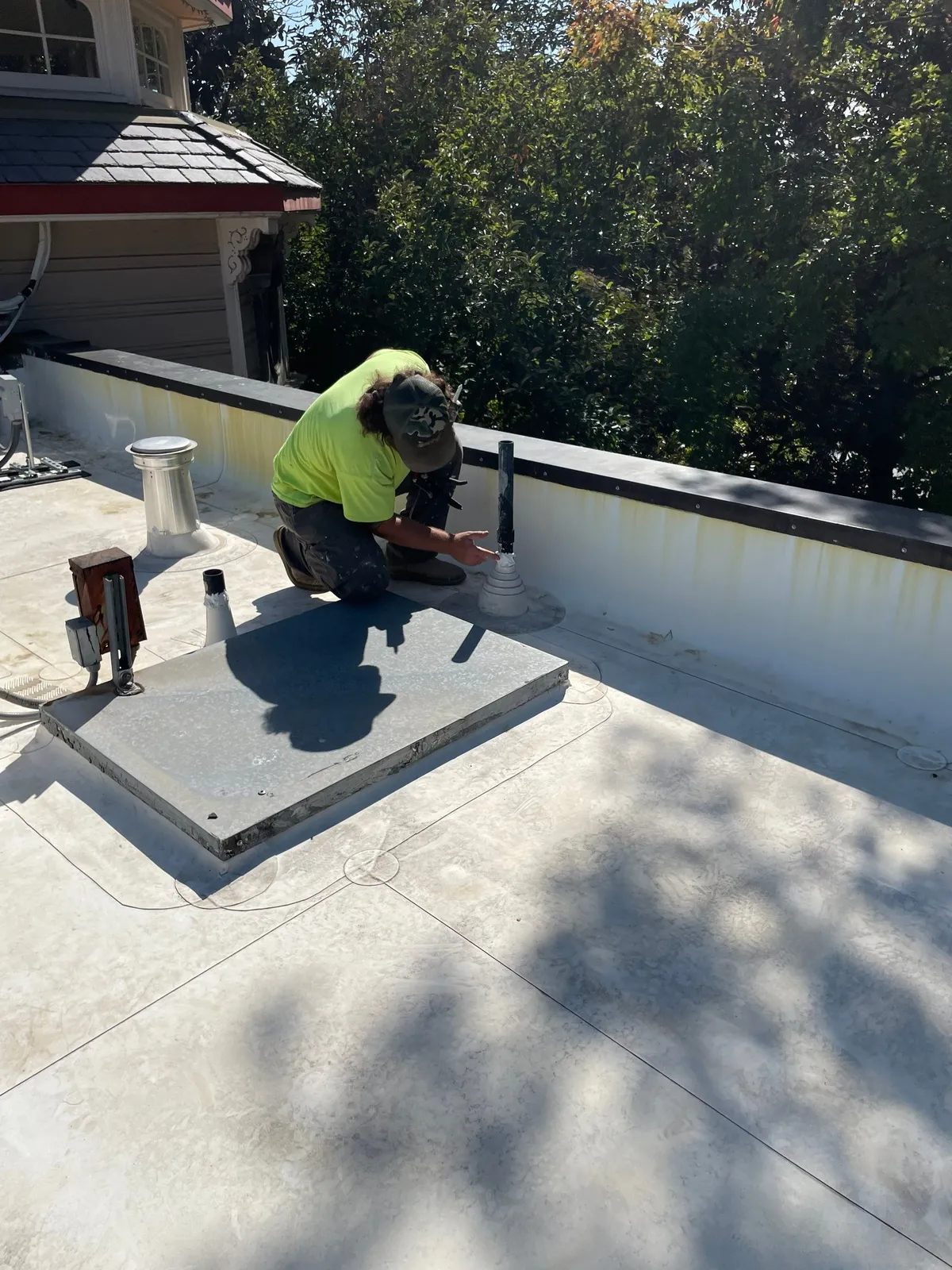
We check the decking under any flashing we remove. If water has been getting in for a while, the wood around the leak may be soft and should be replaced while the roof is open.
Repair the flashing or replace the roof?
On a roof with good life left, flashing repair is usually the right call. It is targeted, quick, and much less expensive than a reroof.
It makes less sense when the roof is near the end of its life anyway. If the shingles are worn, the underlayment is brittle, and there are several flashing problems at once, you may be paying to fix flashing on a roof you will replace in a few years. Every reroof we do includes new flashing throughout. Our guide on roof repair vs. replacement can help you think it through.
Get the leak found and fixed right
If you have a stain near a chimney, skylight, or wall, or you can see cracked rubber around a vent pipe, it is worth having a roofer take a look before the rainy season.
Learn more about our roof repair services, or request an estimate and we will find the source, show you photos, and tell you what it will take to fix it. If water is coming in right now, use our Leak-Stop request form or call (530) 342-6553.
Frequently Asked Questions
What is roof flashing?
Flashing is the metal, and sometimes rubber, that seals the joints and openings in a roof, such as chimneys, skylights, vent pipes, walls, and valleys. It directs water around those openings so it cannot get under the roofing.
How do I know if my roof flashing is leaking?
Look for ceiling stains near a chimney, skylight, or exterior wall, water marks around vent pipes in the attic, rotted siding below a roof-to-wall joint, or visible rust, gaps, and cracked rubber around roof penetrations.
Can roof flashing be repaired without replacing the roof?
Yes. On a roof with good life left, chimney, skylight, pipe, and wall flashing can usually be replaced on their own by removing and resetting the shingles or tile around them.
How long do rubber pipe boots last?
In the Chico heat, the rubber collars on standard pipe boots often crack well before the shingles around them wear out. Have them checked during any roof inspection, especially on roofs more than 10 years old.
Is caulk a good fix for leaking flashing?
Not on its own. Sealant breaks down quickly in the Valley sun. A lasting repair replaces or properly reinstalls the flashing so it sheds water without relying on caulk.