
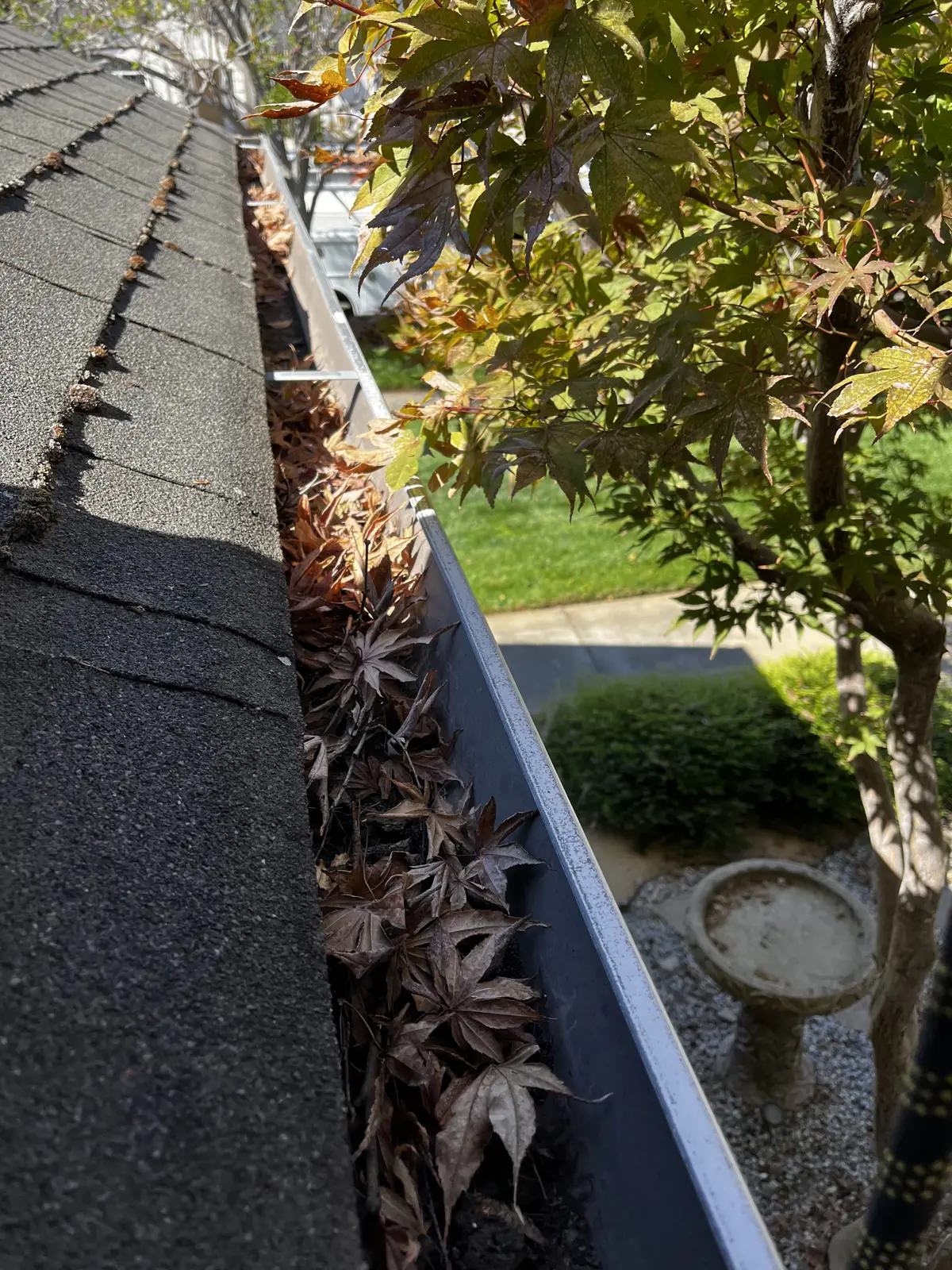
Most Chico homes need their gutters cleaned at least twice a year: once in late fall after the leaves are down, and once in spring. Homes under pines or big valley oaks often need a third cleaning. The goal is simple. Gutters and downspouts should be clear before the first heavy storm of the rainy season, not after it.
That timing is the hard part. Chico is the City of Trees, and the trees do not all drop at once.
Why gutter timing is tricky in Chico
Here is roughly how the year goes on a typical Chico street:
- Late summer: Pines and cedars start shedding needles. Dry needles pack tight in gutters and hold moisture once rain arrives.
- October into December: Valley oaks, sycamores, Chinese pistache, and fruitless mulberries drop the bulk of their leaves. On the Avenues, in Barber, and around Bidwell Park this is when gutters fill fastest.
- Late winter: Some oaks hang onto dead leaves into January and February, then let go in the first big wind.
- Spring: Seed pods, blossoms, and catkins land in gutters and turn to sludge with the last rains.
Most of Chico's rain falls between November and March. That means the gutters have to work hardest at exactly the time the trees are filling them. A cleaning in early September looks great for about six weeks.
If you only clean once a year, aim for after most of your leaves have dropped and before a long run of storms. If you have big trees over the roof, plan on two or three cleanings.
What clogged gutters actually damage
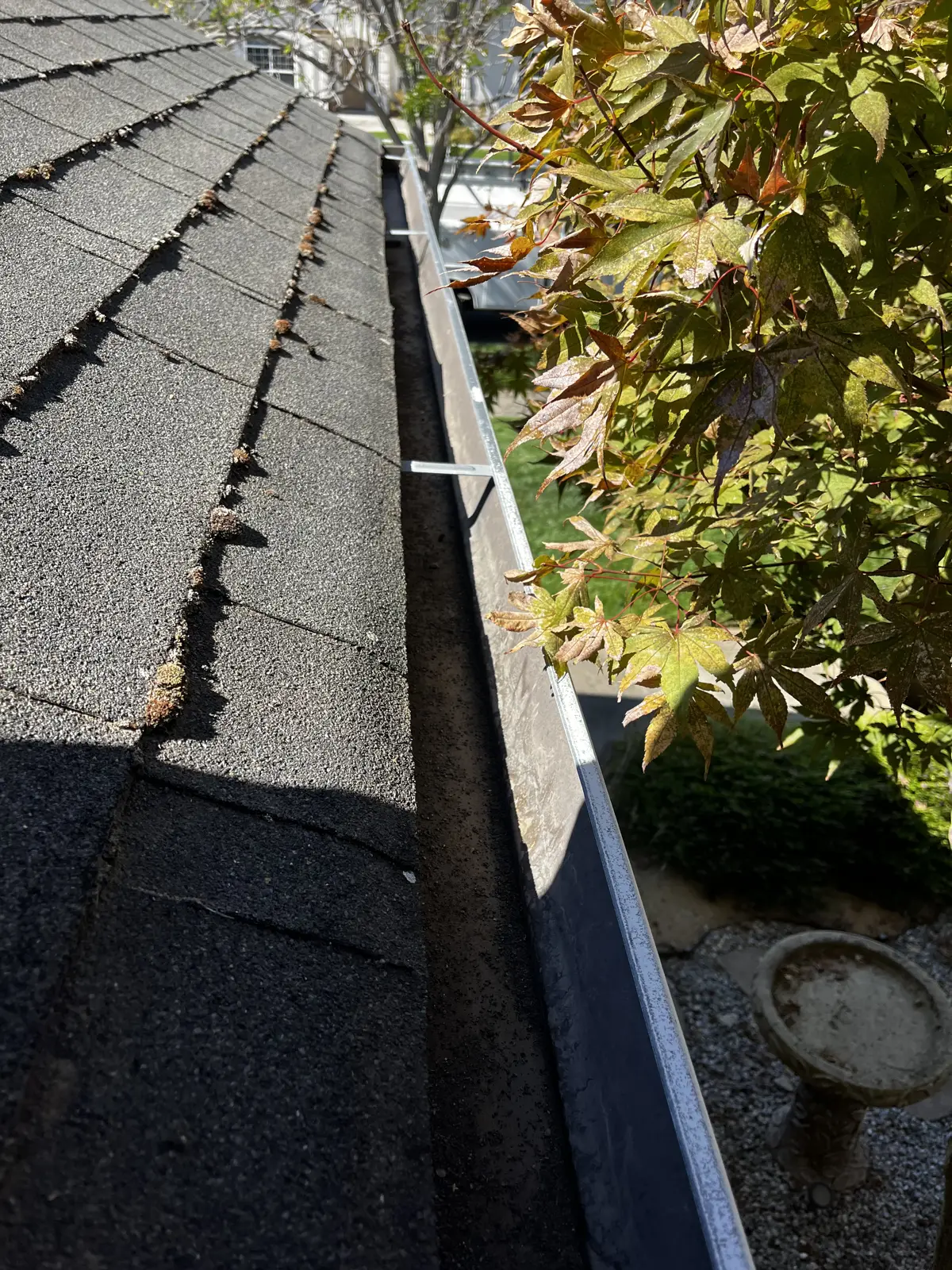
A full gutter is not just an eyesore. Once water cannot get to the downspout, it goes somewhere else.
Fascia and roof edges
Water backs up behind a clogged gutter and soaks the fascia board and the edge of the roof decking. Over a few winters that wood rots. We see this constantly on older Chico homes: soft fascia, rusted gutter hangers, and a gutter that pulls away from the house. Fixing rotted fascia and decking at the eave costs far more than keeping the gutter clear.
Shingles and underlayment at the eave
When a gutter stays full, water and wet debris sit against the first course of shingles. On tile roofs, debris dams the water at the eave and pushes it sideways under the tile. Either way, the roof edge stays wet far longer than it was designed to.
Siding, windows, and foundations
Overflowing gutters dump water straight down the side of the house. That stains siding, soaks window trim, and puts a lot of water right at the foundation. Downspouts need to carry water well away from the house. If yours dump against the foundation or into a flower bed by the wall, ask about extensions.
Pests and fire risk
Wet, rotting leaves attract insects and give rodents a place to nest. In summer, dry leaves and pine needles in a gutter are fuel sitting right at the roof edge. In the foothills that matters a great deal. We covered the fire side of this in what a wildfire-ready roof looks like in Butte County.
Signs your gutters need attention now
You do not have to get on a ladder to spot most gutter problems. Walk around the house and look for:
- Plants or grass growing out of the gutter
- Gutters sagging or pulling away from the fascia
- Water spilling over the front of the gutter during rain
- Stains or streaks on siding under the gutter line
- Downspouts that stay dry during a steady rain
- Shingle granules piling up at the bottom of downspouts
- Peeling paint or soft spots on fascia boards
Granules in the gutter deserve a second look. A few are normal on newer shingles. A lot of them on an older roof can mean the shingles are wearing out. Our guide on how long shingles last explains what that wear looks like.
DIY gutter cleaning: what to know
Plenty of homeowners clean their own single-story gutters, and that is fine. A few things to keep in mind:
- Ladder safety comes first. Falls from ladders send thousands of people to the emergency room every year. Use a sturdy ladder on level ground, have someone hold it, and never lean a ladder against the gutter itself.
- Do not walk the roof if you can avoid it. Tile breaks underfoot, and steep or wet shingles are slippery. Clean from the ladder.
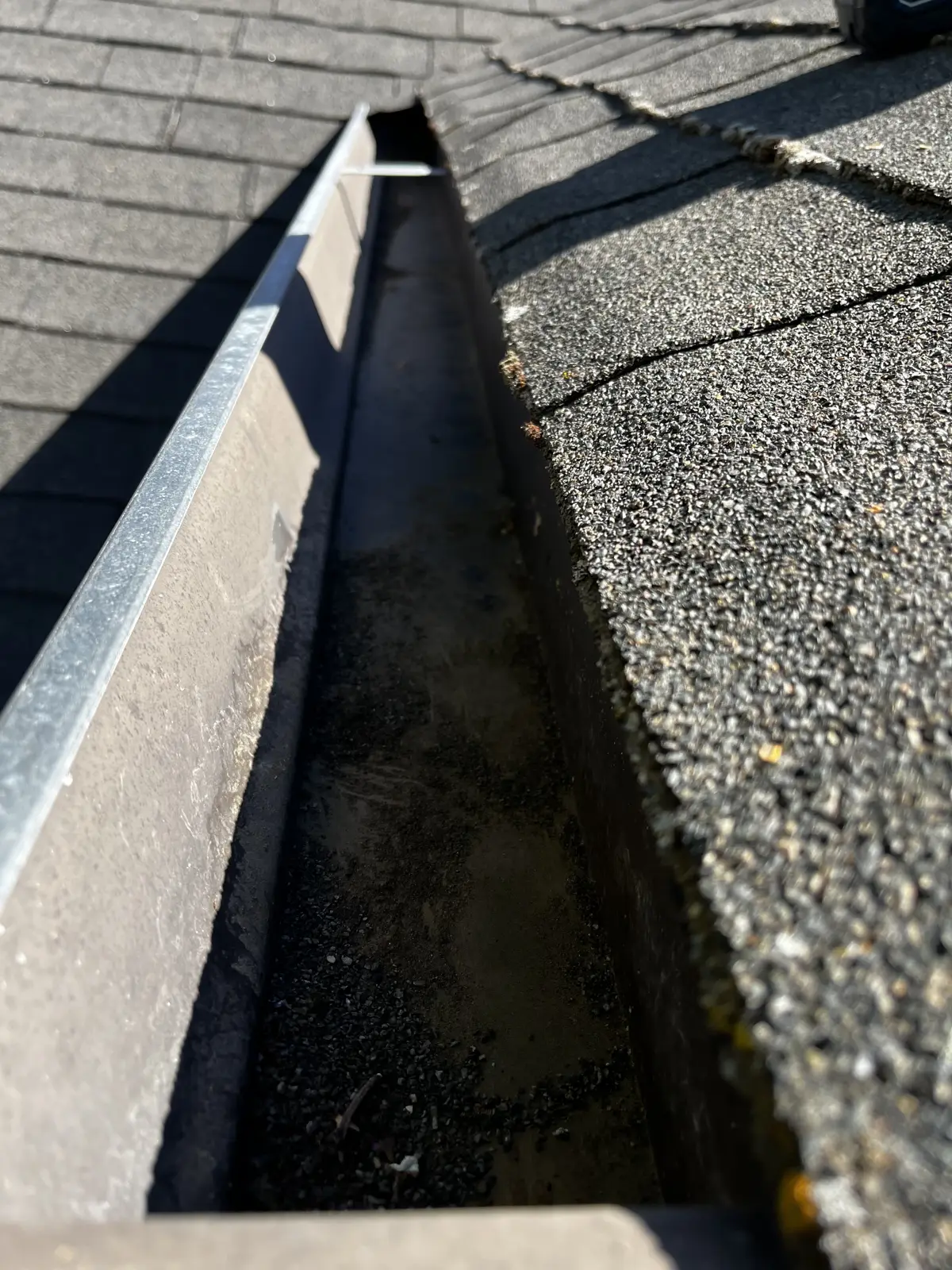
- Flush the downspouts. A clean gutter with a packed downspout still overflows. Run a hose down each one and make sure water comes out the bottom.
- Bag the debris. Leaves dumped in the flower beds wash right back toward the foundation.
Two-story homes, steep roofs, tile roofs, and homes with gutter guards are a different story. That is where most gutter-cleaning injuries happen, and it is worth calling a pro.
Why have a roofer clean your gutters
A gutter cleaning puts someone at the edge of your roof, which is one of the best places to spot early roof problems. When our crews clean gutters, they also do a basic visual review of the accessible roof areas and photograph anything that looks wrong.
Common things we find during a gutter cleaning:
- Cracked or missing shingles near the eave
- Slipped or broken tile
- Lifted or rusted flashing
- Rotted fascia behind the gutter
- Pipe boots with cracked rubber collars
- Debris piled in roof valleys
That is not a full roof inspection, and we say so. But it catches small problems while they are still small. You get the photos either way.
Our gutter cleaning service includes full debris removal, downspout flushing, drainage testing, a basic visual roof review, before and after photos, and ground cleanup. Pricing starts at $295 and depends on the size of your home, number of stories, gutter guards, and roof access.
Do gutter guards solve the problem?
Gutter guards help, especially under pines, but they are not a set-it-and-forget-it fix. Fine debris, pollen, and shingle grit still get through many guard styles. Needles and leaves can mat on top of the guard and shed water over the edge.
Guards usually stretch out the time between cleanings. They do not eliminate cleaning. If you have guards, plan on having them checked and cleared at least once a year.
Make it part of your fall routine
The best time to think about gutters is before you need them. A fall gutter cleaning pairs well with the rest of your rainy season prep. Our checklist for getting your roof ready for the North Valley rainy season walks through the rest.
If your gutters are full, sagging, or overflowing, request a gutter cleaning quote or call (530) 342-6553. We serve Chico, Oroville, Paradise, Durham, Magalia, and the surrounding Butte County communities.
Frequently Asked Questions
How often should gutters be cleaned in Chico?
At least twice a year for most homes: once in late fall after the leaves drop and once in spring. Homes under pines, valley oaks, or sycamores often need a third cleaning during the rainy season.
What is the best month to clean gutters in Chico?
Late fall, usually November or December, after most leaves are down and before a long stretch of storms. An early fall cleaning helps, but many Chico trees keep dropping leaves well into winter.
Can clogged gutters cause a roof leak?
Yes. When gutters back up, water and wet debris sit against the roof edge and fascia. That can rot the decking at the eave and push water under shingles or tile, which shows up as a leak or a stain near an outside wall.
Do I still need to clean gutters if I have gutter guards?
Yes, though less often. Fine debris and shingle grit get through many guards, and leaves can mat on top of them. Have guards checked and cleared at least once a year.
Does a gutter cleaning include a roof inspection?
Ours includes a basic visual review of accessible roof areas, with photos of anything that needs attention. It is not a full roof inspection or leak investigation, which would be a separate visit.