
A flat roof is never truly flat. Residential "flat" roofs are low-slope roofs, usually with a pitch below 3:12, and they need different materials than the pitched roof on the rest of your house. Most leaks we see on them come from ponding water, failed seams, and the joint where the low-slope section meets the main roof. The fix is usually a targeted repair if the membrane is sound, or a new membrane system if it is worn out. Shingles are not the answer on a roof that flat.
Plenty of Chico homes have at least one of these sections. Here is how to tell what yours needs.
Where flat roofs show up on Chico homes
- Covered porches and patios tied into the main roof
- Carports and garages, especially on 1950s through 1970s ranch homes
- Room additions built off the back of the house
- Mid-century and modern homes with long, low rooflines
- Dormers and shed roofs with very shallow pitch
Many of these were built by different crews at different times than the main roof. That is part of why they cause trouble.
Why flat sections leak
Ponding water
Water should drain off a low-slope roof within about 48 hours after rain. When it sits longer, it finds every weak seam, breaks down some materials faster, and adds weight. Ponding usually means the slope is too low, the framing has sagged, or the drain or edge is blocked.
Wrong materials
This is the most common problem we find. Asphalt shingles need a minimum slope of 2:12, and two layers of underlayment below 4:12. We regularly see shingles installed on porch roofs well below that. Water backs up under the tabs, and the porch leaks every winter.
Rolled roofing on low pitches is another one. It is inexpensive and fast to install, but it has a short life in the Valley sun and its seams are vulnerable.
Seams and laps
Every membrane roof has seams. Older built-up and rolled roofs rely on asphalt and adhesive at the laps, which dry and crack in the heat. Single-ply and modified bitumen roofs depend on how well the seams were welded or sealed during installation.
The transition to the main roof
Where a low-slope porch or addition meets the pitched roof or a wall, water from the bigger roof pours onto the smaller one. If the flashing and membrane are not tied together correctly, water gets in at the joint. Many porch leaks start here, not in the middle of the flat section.
Heat and UV
Chico summers are hard on flat roofs. Dark surfaces get very hot, materials expand and contract every day, and sealants dry out. We covered the heat side in what 100-degree Chico summers do to your roof.
The right materials for a low-slope roof
Single-ply membranes (TPO and PVC)
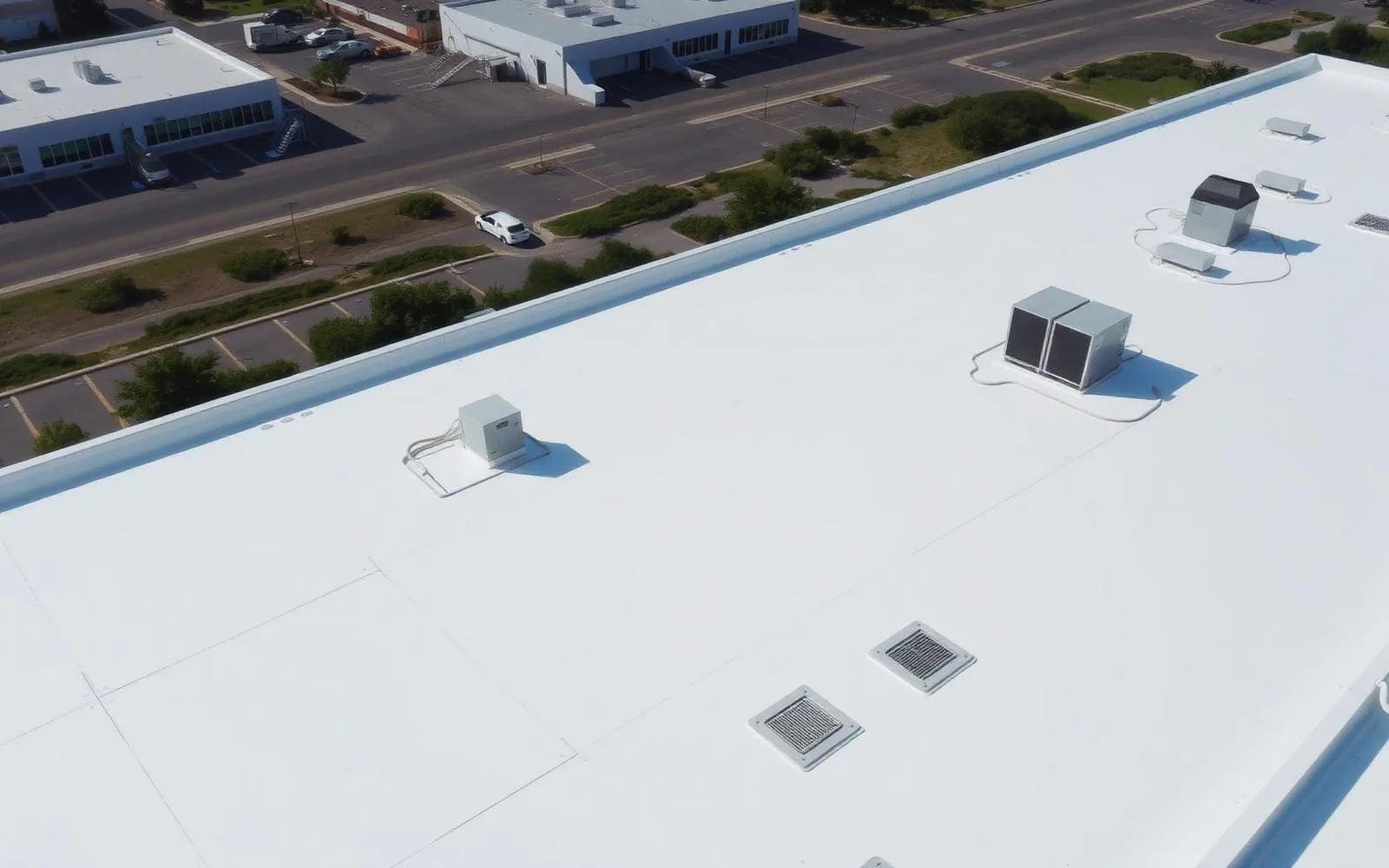
Single-ply membranes come in large sheets with heat-welded seams. White and light colors reflect heat, which helps keep the room below cooler and meets California's cool roof requirements for low-slope roofs. They are a strong choice for porches, additions, and full low-slope homes.
Modified bitumen
Modified bitumen is an asphalt-based membrane reinforced with polyester or fiberglass. It is installed in layers and is tough under foot traffic. Cap sheets with reflective granules or coatings help with heat.
Built-up roofing
Built-up roofing is layers of felt and asphalt, often with gravel on top. It was common on older homes and commercial buildings. It can last a long time, but it is heavy, and repairs on old built-up roofs can be tricky.
Coatings
Roof coatings can extend the life of some low-slope roofs that are still sound. They are not a fix for a roof that is already failing, wet underneath, or ponding badly.
Repair or replace?
A repair makes sense when:
- The leak is at one seam, one penetration, or the transition flashing
- The membrane is otherwise flexible and well-adhered
- The decking is dry and solid
Replacement makes sense when:
- The roof has shingles or rolled roofing on a slope too low for them
- There are several leaks, blisters, or widespread cracking
- Water is ponding because the slope or framing needs correction
- The decking or insulation underneath is wet
If you are replacing the main roof anyway, it is the right time to do the low-slope sections too, with flashing at the joint done as one system. Our guide on roof repair vs. replacement covers how to weigh the decision.
Flat roof care through the rainy season
- Keep leaves and needles off. Flat roofs collect debris fast in the City of Trees.
- Keep edges, scuppers, and gutters clear so water can leave the roof.
- Look for ponding a day or two after a storm.
- Watch for stains on porch ceilings and at the wall where the addition meets the house.
- Have flashings and seams checked before the rainy season.
The same principles apply to commercial buildings at a larger scale. Our flat roof maintenance checklist goes item by item.
Get your low-slope roof checked
We work on low-slope roofs on homes and commercial buildings across Chico, Oroville, Paradise, and the rest of Butte County. If your porch, carport, or addition leaks, learn more about our roof repair services or request an estimate. For a building with a larger flat roof, see our commercial roofing services.
Frequently Asked Questions
Why does my flat porch roof keep leaking?
The most common causes are ponding water, failed seams, shingles or rolled roofing installed on a slope too low for them, and poor flashing where the porch roof meets the house. The joint with the main roof is a frequent source.
Can you put shingles on a flat roof?
No. Asphalt shingles need a slope of at least 2:12, and slopes between 2:12 and 4:12 need two layers of underlayment. Flatter roofs need a membrane system such as TPO, PVC, or modified bitumen.
What is the best roofing material for a low-slope residential roof?
For most homes, a single-ply membrane like TPO or PVC, or a modified bitumen system, is a good choice. Light-colored membranes reflect heat and help meet California's cool roof requirements for low-slope roofs.
How long should water stand on a flat roof?
Water should drain within about 48 hours after rain. Water that sits longer points to a drainage, slope, or framing problem that should be corrected.
Can a flat roof be repaired instead of replaced?
Yes, if the membrane is still sound and the leak is limited to a seam, a penetration, or the flashing. If the roof has widespread cracking, wet insulation, or the wrong material for its slope, replacement is usually the better value.