
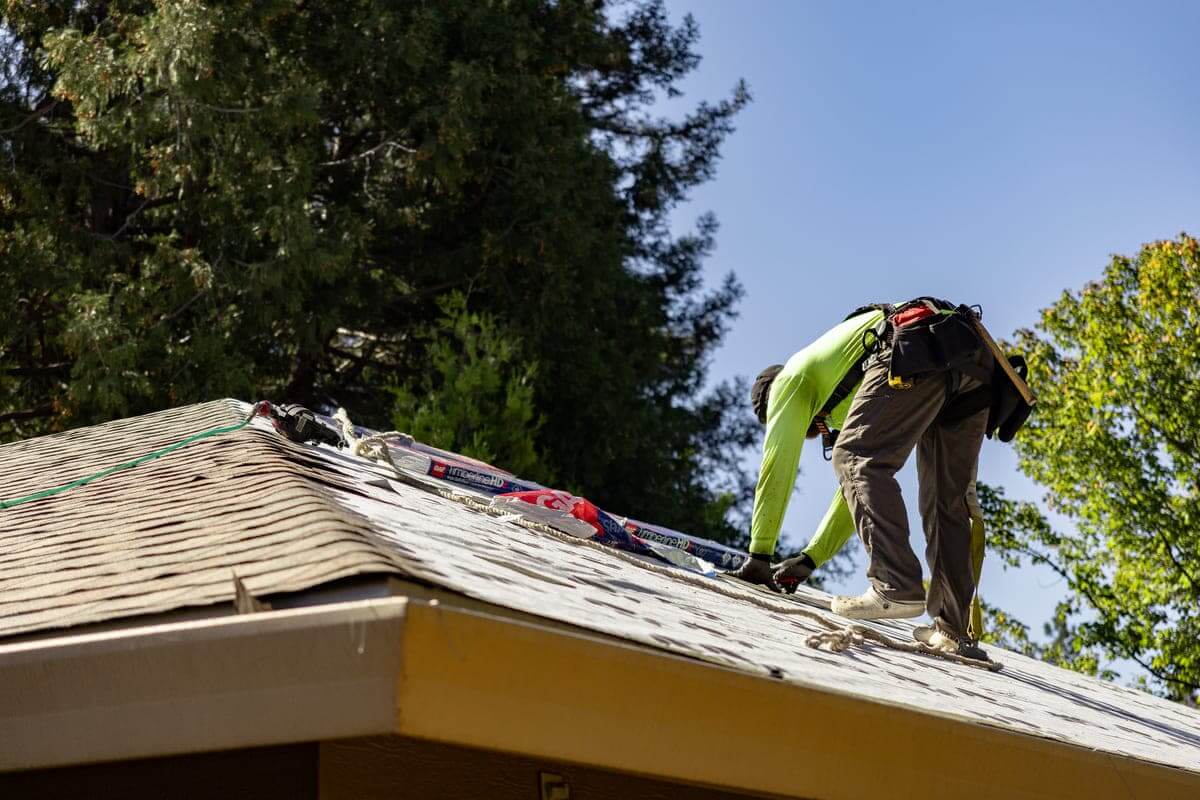
See how long each phase takes and what affects the schedule from start to finish.
If you're thinking about a roof replacement or already have one scheduled, you might wonder: How long will my home be a construction zone?
Most asphalt shingle roofs finish in one to three days, but the timeline shifts based on the size of your home, the complexity of the roof, the material you choose, and even the weather here in Northern California.
This guide breaks down what actually affects the schedule so you know what to expect and how to plan for a smooth project. By the end, you'll have a clear picture of how long your replacement should take and why.
How Long Does a Roof Replacement Take?
Most residential asphalt shingle roofs take one to three days to replace.
Simple roofs on single-story homes often finish in a day, while larger homes or roofs with extra features need more time.
Metal, tile, and specialty materials follow longer timelines because they require more precision and heavier handling.
These are the typical ranges you can expect:
- Asphalt shingles: 1 to 3 days
- Standing seam metal: 2 to 5 days
- Tile or slate: 6 to 12 days
- Commercial or large residential roofs: up to several weeks, depending on size and scope
These timelines describe the installation window only.
Permit approvals, weather, and material availability can shift the overall start-to-finish schedule.
A quick conversation with your roofing contractor can help you pin down a realistic window based on your home and the season.
What Affects How Long a Roof Replacement Takes?
A roof replacement moves faster when the crew can work safely and the roof's structure stays straightforward.
Several factors play into the timing, and understanding them helps you set realistic expectations.
Size of the Roof
Larger homes require more tear-off, more decking inspection, and more installation work.
A small single-story home may finish in a day. A home over 3,000 square feet can take several days.
Roof Complexity
Extra features slow things down because they require careful detailing.
Common elements that add time include:
- Multiple valleys
- Dormers
- Skylights
- Chimneys
- Steep pitches
A simple roof allows the crew to move quickly. A roof with many angles requires slower, more precise work.
Number of Existing Layers
Some homes have more than one layer of shingles.
When that happens, the crew needs extra time to remove everything and inspect the decking underneath.
More layers mean more debris, more hauling, and a longer prep phase.
Condition of the Deck
Rotten or weakened decking needs to be replaced before new materials can go on.
The crew won't know the full scope until the old shingles come off, so decking repairs can extend the schedule by several hours or a full day.
Weather and Seasonal Conditions
Rain, high winds, and extreme heat slow the job.
Crews pause work when conditions become unsafe or when moisture could damage exposed materials.
Northern California's summer heat waves and winter storms can shift timelines, so scheduling flexibility helps.
Crew Size and Experience
A well-coordinated team moves fast. A larger, skilled crew can finish in a fraction of the time compared to a small or inexperienced one.
Professional planning also reduces gaps in the schedule, like waiting on materials or debris removal.
These factors shape the final timeline, but a good roofer will walk you through them so you know exactly what's influencing your project window.
What Happens During Each Day of a Roof Replacement?
A roof replacement follows a predictable flow, and many standard asphalt shingle roofs fit this entire process into one long day. Larger or more complex roofs may need a little more time, but the steps stay the same.
Day 1: Tear-Off and Deck Inspection
The crew removes old shingles and underlayment, then checks the decking for damage. Any soft or rotten boards get replaced so the new roof has a solid base. This phase creates the most debris, and cleanup starts as sections open up.
Day 2: Installing the New Roofing System
Underlayment, flashing, shingles, or metal panels go on next. Crews work in sections to keep your home protected. Many homes finish by the end of this day, especially when the weather cooperates and the decking looks clean.
Day 3: Final Installation and Cleanup
More detailed roofs often extend into a third day. Crews complete ridge caps, ventilation components, and sealing. Cleanup wraps up here as well, including magnet sweeps and hauling away debris.
Most projects land somewhere in this range. Your roofer will tell you early on if your home is likely to finish in a single day or if it needs extra time.
What Does the Full Roof Replacement Timeline Look Like?
The installation itself is only part of the overall timeline. A few steps happen before and after the crew arrives, and scheduling plays a big role in how long the whole process takes.
Permit and HOA Approval
Many cities in Northern California require permits for roof replacements. Approval usually takes one to two weeks, depending on local workload. Homes in HOAs may need an extra review step before work can begin.
Scheduling Lead Time
Roofers often book projects several weeks out, especially during busy seasons. In many areas, homeowners see two to six weeks between signing a contract and installation day.
Storms, wildfire seasons, and high demand can stretch that window, while slower months may open up sooner dates.
Urgent leaks or active damage often move higher on the list so crews can stabilize the roof quickly.
Material Ordering
Standard asphalt shingles are usually available right away.
Specialty colors, standing seam metal panels, tile, or other custom materials may need extra time to fabricate or deliver, which can shift your start date.
Installation Window
Once permits are in place, materials are on hand, and your date is scheduled, the on-site work begins.
Asphalt shingle roofs usually finish in one to three days. Metal, tile, and complex roofs often need more time.
Final Cleanup and Quality Check
After installation, the crew inspects the roof, confirms all details are sealed and secure, and completes a full cleanup of the property.
This step usually takes a few hours and wraps up the project.
When you put all of this together, the full process often spans a few weeks to a couple of months from first approval to final cleanup, depending on your roofer's schedule, permits, materials, and the season.
A clear timeline from your contractor will help you know where your project stands at each step.
Will Your Home Be Exposed During the Replacement?
A roof replacement feels a lot easier when you know your home will stay protected the whole time. We plan the work so you never have a bare roof sitting open overnight.
How We Keep Your Home Covered
Our crew removes only as much roofing as we can safely dry-in the same day.
After we check the decking, we install underlayment right away so your home has a waterproof barrier in place.
If the forecast changes or weather moves in sooner than expected, we secure tarps and cover any open areas before we leave for the day.
What Happens if Weather Shifts
Rain, wind, or extreme heat can slow the schedule, but your home stays covered.
We watch the forecast closely, adjust the plan when we need to, and avoid leaving exposed wood where moisture could cause problems.
You should always feel comfortable asking how your roof will be protected. A clear plan for coverage is a key part of any good roof replacement.
How Can You Help Your Roof Replacement Go Faster?
You have more control over the schedule than you might think. A few simple steps on your end help the crew move smoothly from start to finish.
Before the project starts, you can:
- Confirm material and color choices early so we can order everything on time.
- Clear the driveway and access points so trucks, trailers, and crews can get in and out easily.
- Move patio furniture, grills, and decorations away from the house to give us space to work and protect your belongings.
- Let us know about pets, gate codes, or locked areas so the crew is not delayed getting where they need to go.
Avoid scheduling other contractors at the same time so everyone has room to work safely.
These small steps keep the project organized, reduce delays, and help your roof replacement stay as close as possible to the original timeline.
Want a Smooth Roofing Experience From Start to Finish?
A roof replacement is a big project, but it shouldn't feel overwhelming.
When you work with a skilled crew, you get clear communication, steady progress, and a home that stays protected every step of the way.
At Butte Roofing, we've spent more than 75 years helping Northern California homeowners get reliable roof replacements supported by honest guidance and quality workmanship.
If you want a timeline tailored to your home, schedule a free inspection and we'll walk you through exactly what to expect.
Key Takeaways
- Most asphalt shingle roofs take one to three days to replace.
- Roof size, complexity, weather, and crew experience shape the final timeline.
- Scheduling often adds two to six weeks before installation begins.
- Your home stays protected because crews work in sections and dry-in as they go.
- Simple prep on your end helps the project move faster and stay on schedule.
Homeowners Also Ask:
How long does a roof replacement take in most cases?
Most asphalt shingle roofs finish in one to three days once the crew starts. Larger homes, steep pitches, or specialty materials can extend the timeline.
Can a roof really be replaced in one day?
Yes. Many straightforward asphalt shingle roofs finish in a single day when the decking is in good shape and the weather cooperates.
What slows a roof replacement down the most?
Complex roof designs, multiple tear-off layers, decking repairs, weather delays, and limited work access are the biggest contributors to longer timelines.
Will rain delay my project?
Rain can pause work, but your home stays protected. Crews dry-in as they go and secure tarps when needed to keep moisture out.
Do I need to be home during the replacement?
You don't have to be home. Many homeowners choose to be away for the day because of noise, but it's completely up to you.